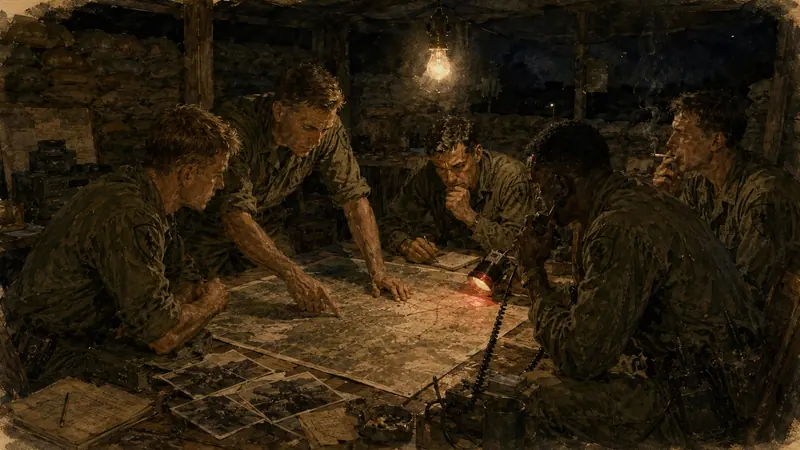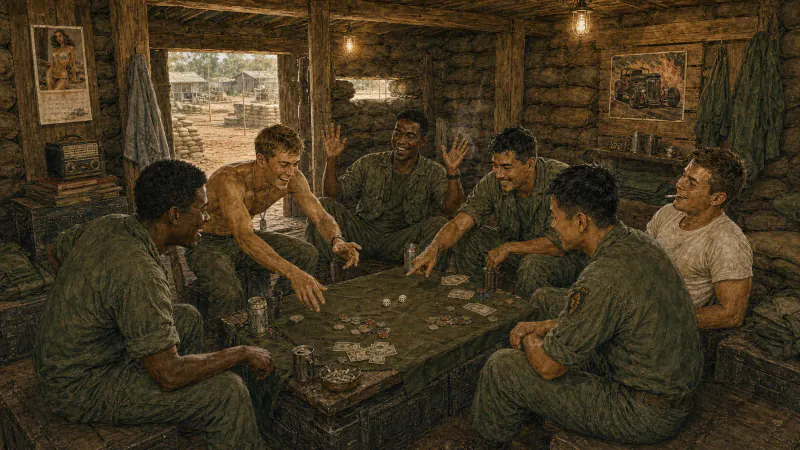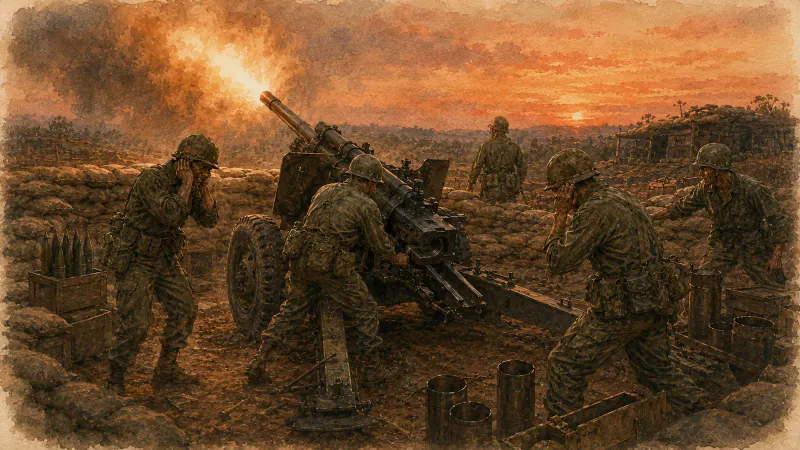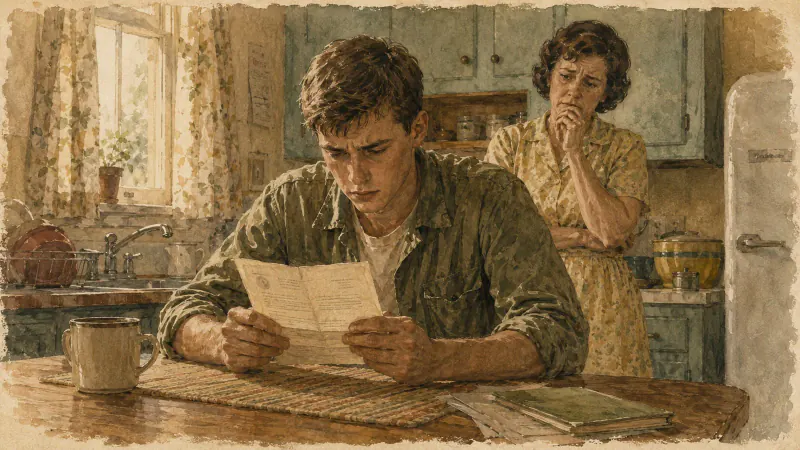
P.A.T.H.: Vietnam

P.A.T.H.: Vietnam — Developer's Dispatch

Game Updates, Reflections, and Dev Notes

Developer's Dispatches on design, history, systems, and other stories behind the P.A.T.H. Games title; P.A.T.H.: VIETNAM.

All Dispatches

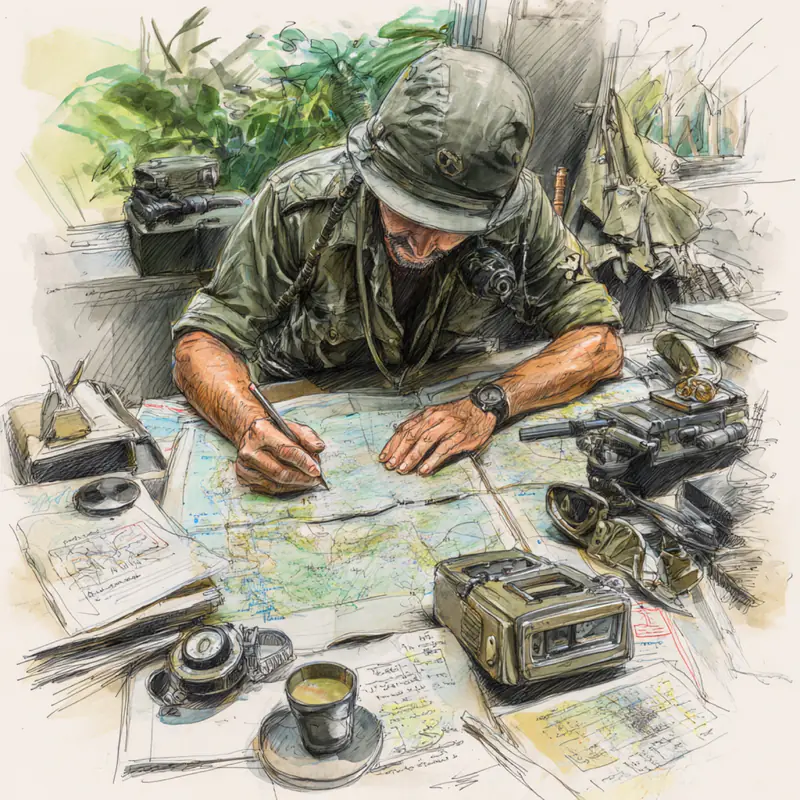
A soldier facing a road through Vietnam beneath unit patches, maps, and helicopters
The Long Road to P.A.T.H.: Vietnam
Games sometimes acquire a neat origin story after the fact. There is a sketch on a napkin, a lightningbolt moment, or a weekend when everything suddenly clicked. P.A.T.H.: Vietnam does not h…
A young man sits quietly at a 1960s kitchen table holding a mug

LifeP.A.T.H.: The Road Before the Tour

The first day of P.A.T.H.: Vietnam is 1 August 1967. The first day of your character's life is not. That simple fact sits behind LifeP.A.T.H., one of the project's longestrunning ideas. The…

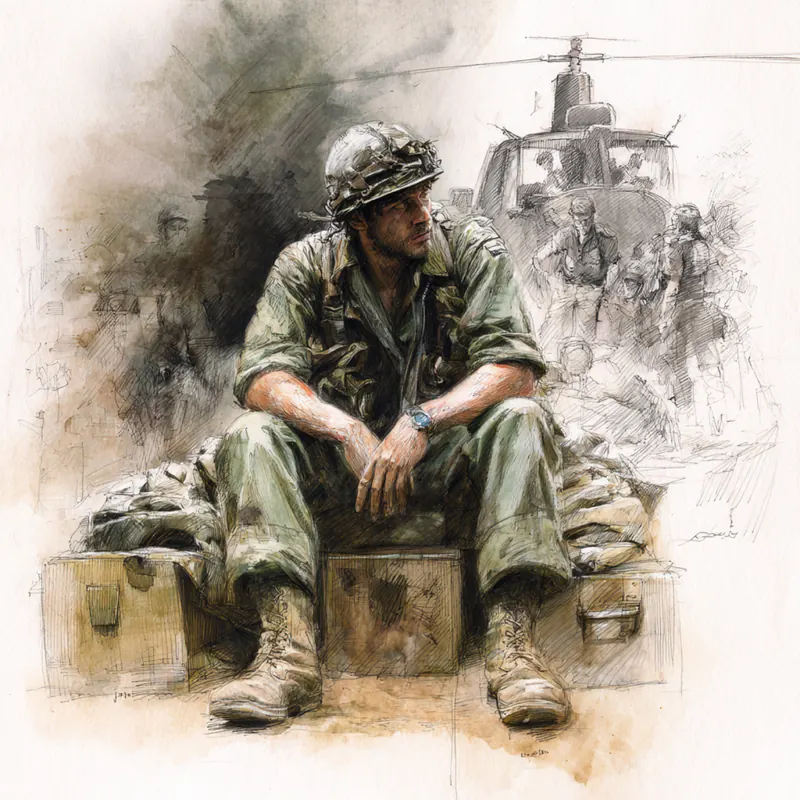
An illustrated infantry soldier stands with his field gear

Create a Person, Not a Superhero

Character creation often begins with a familiar question: what is the strongest build? P.A.T.H.: Vietnam asks a different one: who is this person? That is not a rule against planning. Your s…

A varied group of illustrated soldiers walk forward in different field roles

Eight Ways to Begin the Tour

P.A.T.H.: Vietnam launches with eight playable archetypes. They are military jobs, but “class” is only part of what they mean. Each role changes the problems you notice, the equipment you ca…

An infantry patrol moves carefully through dense jungle

The Grunt: Learning the Ground War

“The Grunt” is the plainest title in the P.A.T.H.: Vietnam launch roster. That plainness is part of its meaning. The Grunt is the infantry soldier whose job fills whatever space the day crea…

An illustrated machine gunner carries his weapon and ammunition in the field

The Grenadier and Machine Gunner: Two Kinds of Firepower

The Grenadier and the Machine Gunner both carry more firepower than an ordinary rifleman. That similarity can make them look like two versions of the same choice. They are not. The Grenadier…

An illustrated combat medic carries medical gear in the field

The Medic Keeps People in the Story

The Medic has one of the clearest purposes in P.A.T.H.: Vietnam: preserve life. Clarity does not make the role easy. When the squad needs the Medic, someone is frightened, hurt, or running o…

An illustrated radio telephone operator carries a field radio and handset

The RTO Carries the Voice

The Radio Telephone Operator carries a device, but his real load is connection. The PRC25 links the people on the ground to command, information, support, and help beyond what they can see.…

A group of soldiers with different specialist equipment stand together

Three Jobs That Hold the Tour Together

The Engineer, Mechanic, and Forward Observer do very different work. One reads hidden danger and changes terrain. One keeps vehicles and equipment alive. One connects observation on the grou…

A soldier wearing headphones studies a campaign journal and map at a crowded desk

What Kind of Game Is P.A.T.H.: Vietnam?

P.A.T.H.: Vietnam is easiest to describe by starting with what it is not. It is not a firstperson shooter. It is not a game about collecting territory, building an army, or turning a histori…

Newly arrived soldiers step into the heat beside military transport

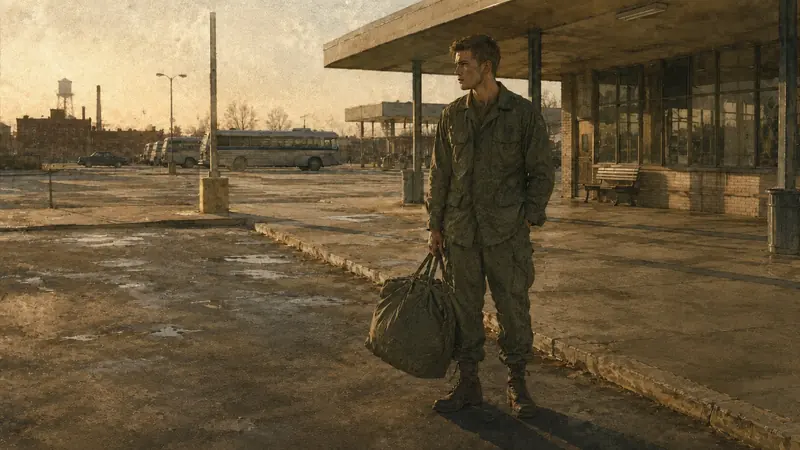
From Home to Dau Tieng: Your First Days

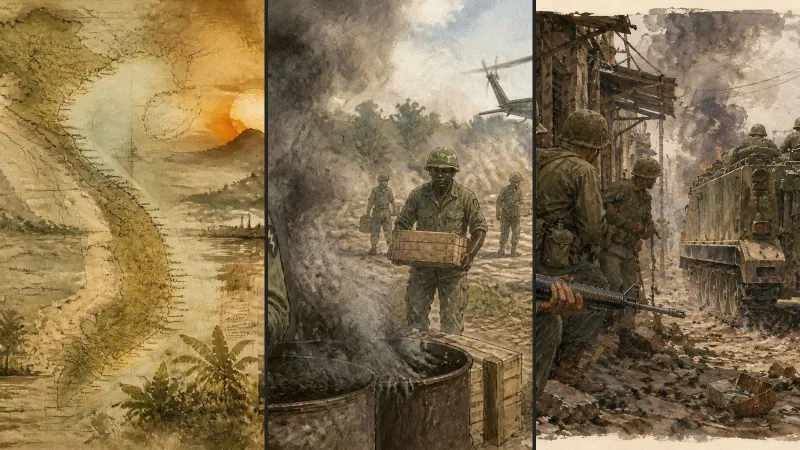
P.A.T.H.: Vietnam does not begin by dropping a finished soldier into a patrol. It begins before the player knows the unit. The onboarding follows the road from the wider history into one ind…

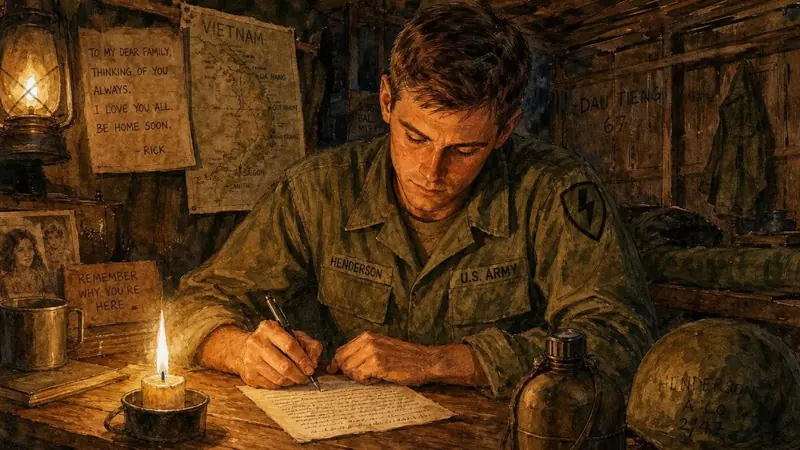
Exhausted soldiers rest in a dark hooch while one writes by candlelight

A Day in Four Shifts

Every day in P.A.T.H.: Vietnam has four parts: Dawn, Day, Dusk, and Night. That division looks simple on the Action Board. Its purpose is larger than organizing buttons. Four shifts let the…

Three soldiers build a barbed-wire defensive position in daylight

Major Work, Minor Human Moments

The Action Board in P.A.T.H.: Vietnam divides choices into Major and Minor actions. The labels describe time and effort, not importance. A work detail can occupy the centre of a day. Writing…

A field notice, helmet and dog tags rest on a wooden crate under a lantern

The Field Desk Is the Other Battlefield

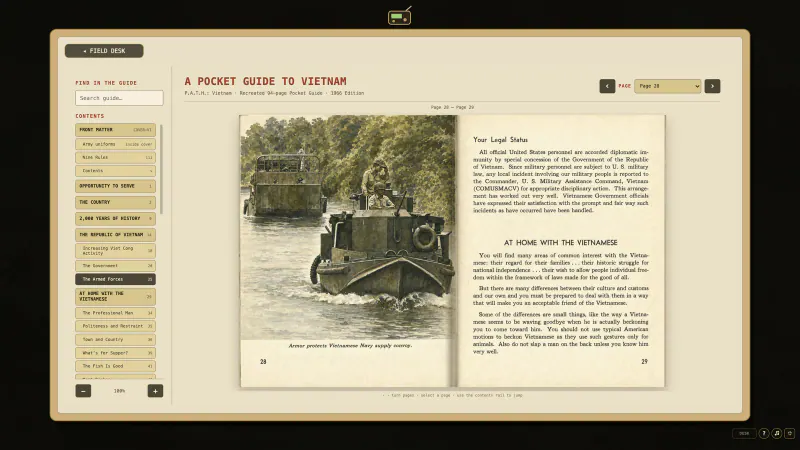
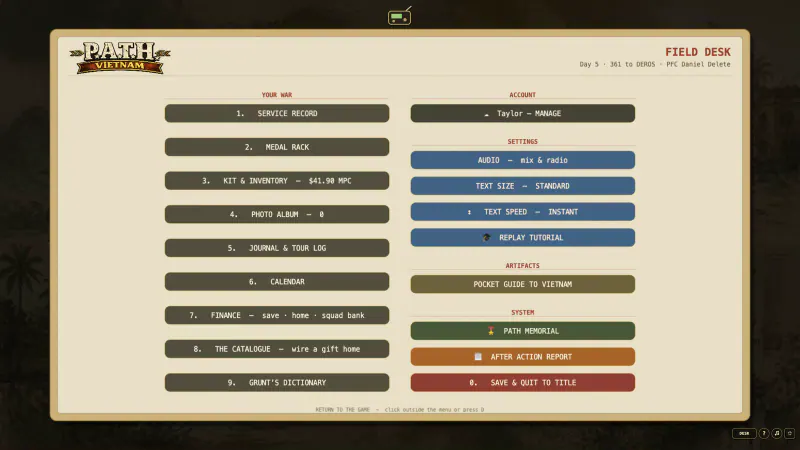
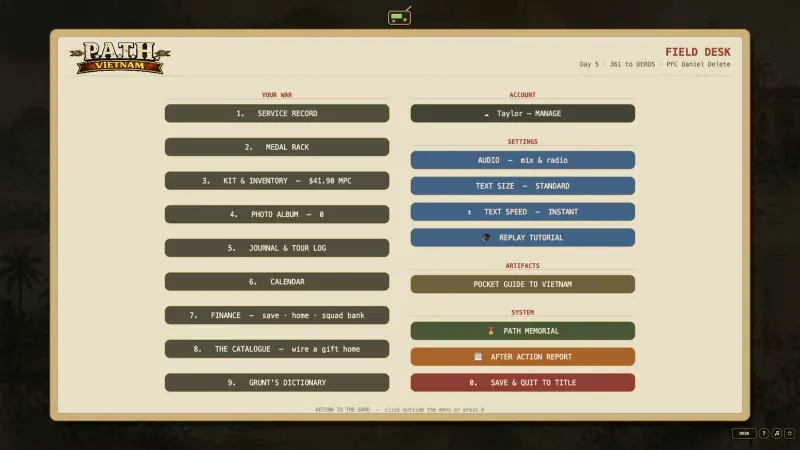
Press D, tap the desk control, and the day pauses. The Field Desk opens on paper, records, kit, photographs, money, memory, settings, and a real artifact reader. It could have been a convent…

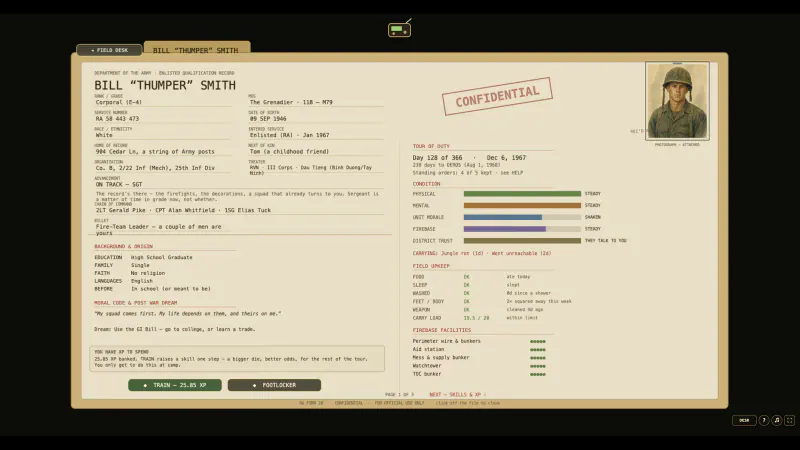
The in-game service record presents a soldier's identity, record and current condition

How to Read Your Service Record

The Service Record is the most concentrated view of your character in P.A.T.H.: Vietnam. It can look like a sheet of Army paperwork because that is part of its purpose. It is also a practica…

Weapons, ammunition and field gear are laid out across a supply crate

Weight Is a Decision

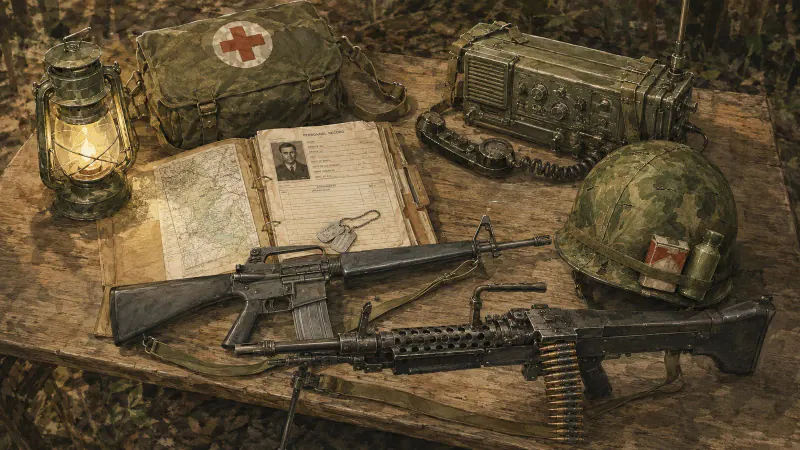
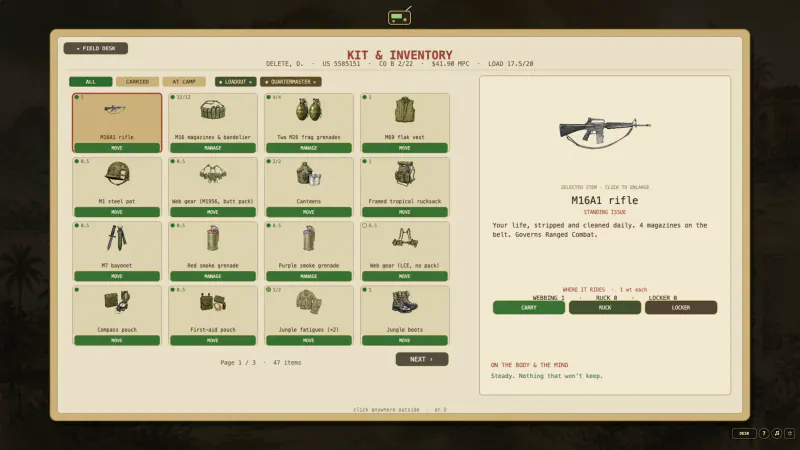
Inventory systems often ask one question: do you own the item? P.A.T.H.: Vietnam asks several more. Where is it? Are you carrying it? Is it in the rucksack or part of the fighting load? Does…

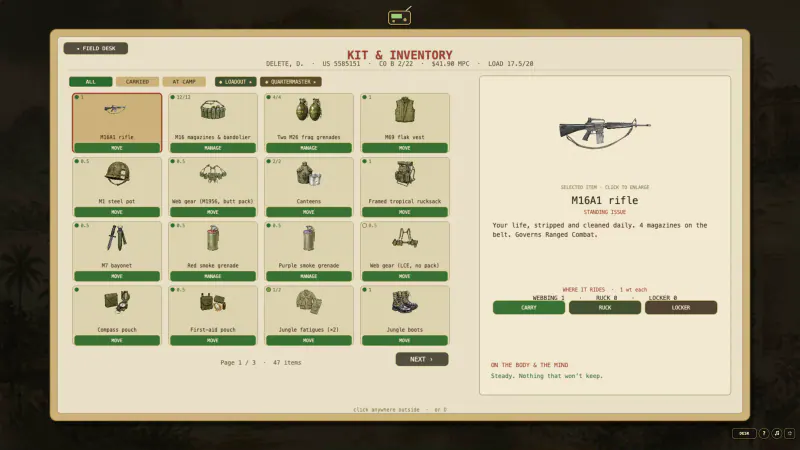
The in-game kit inventory divides equipment between carried gear, ruck and locker

Carried, Locker, Ruck: Building a Loadout

A good P.A.T.H.: Vietnam loadout answers three questions: What stays on the soldier? What rides in the rucksack? What remains in the footlocker? The answers change with the role and the day.…

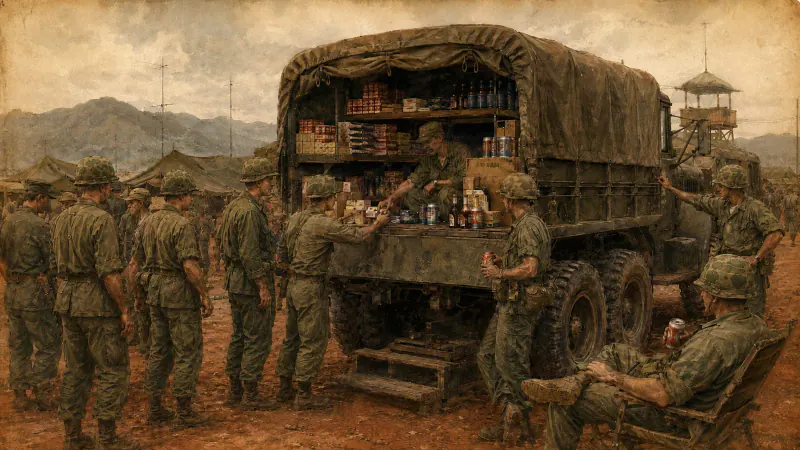
A mobile PX truck is open for soldiers at a forward base

The PX Truck and the Small Comfort

The PX truck does not arrive with a heroic soundtrack. It brings ordinary things. Drinks, food, toiletries, batteries, reading material, cards, clothing, a watch, a camera, a radio, and the…

A carved teak elephant offered through the period-inspired mail-order catalogue

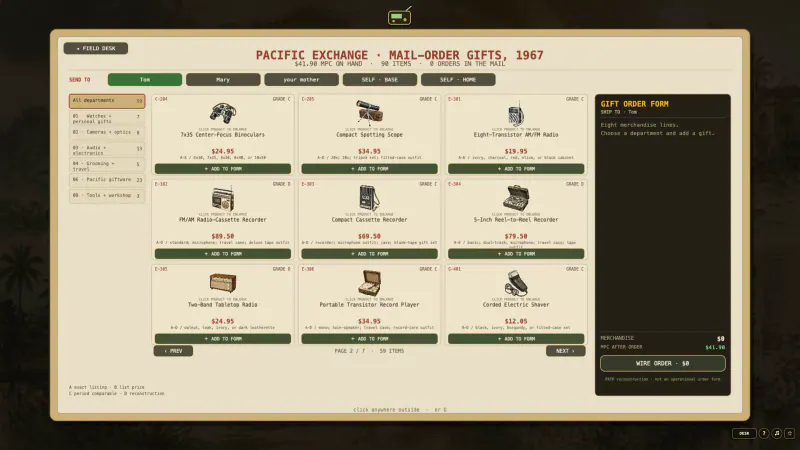
The Catalogue Sends Something Home

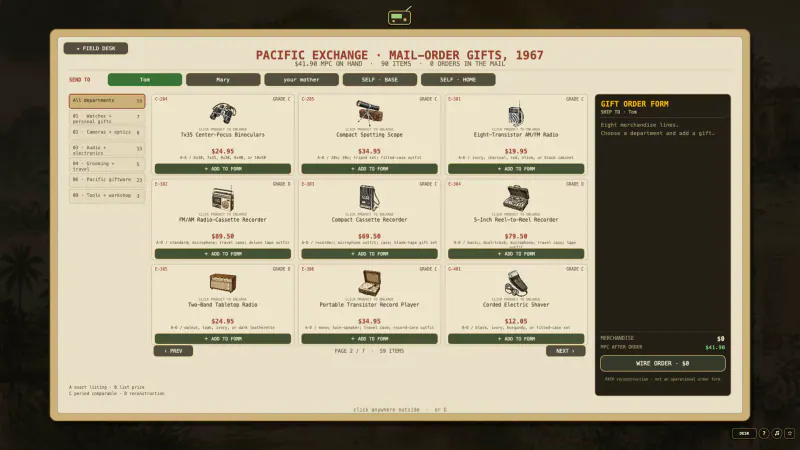
The PX sells things the soldier can use. The Catalogue offers something different: a way to make a choice in Vietnam that arrives in somebody else's life. From the Field Desk, the player can…

Soldiers line up at a field pay table to receive Military Payment Certificates

What Your Pay Says About You

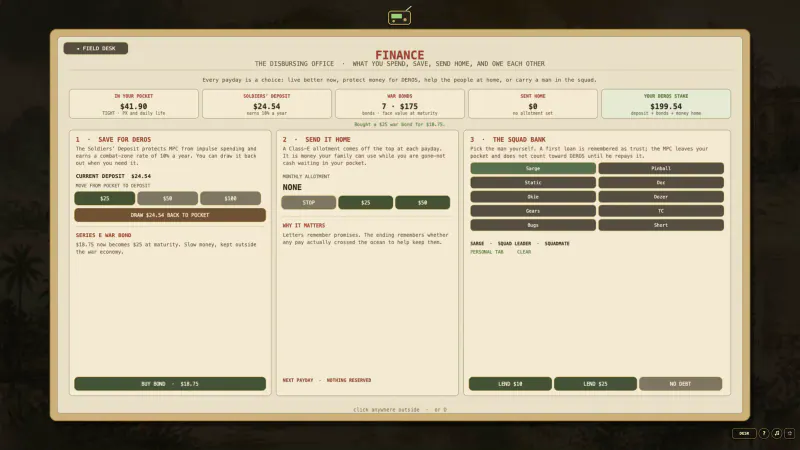
The Finance desk in P.A.T.H.: Vietnam does not exist to turn the tour into a business simulation. It exists because money connects the soldier to three different lives at once. There is the…

The in-game war journal records personal entries beside the dated tour log

Journal and Tour Log: Two Records of the Same Day

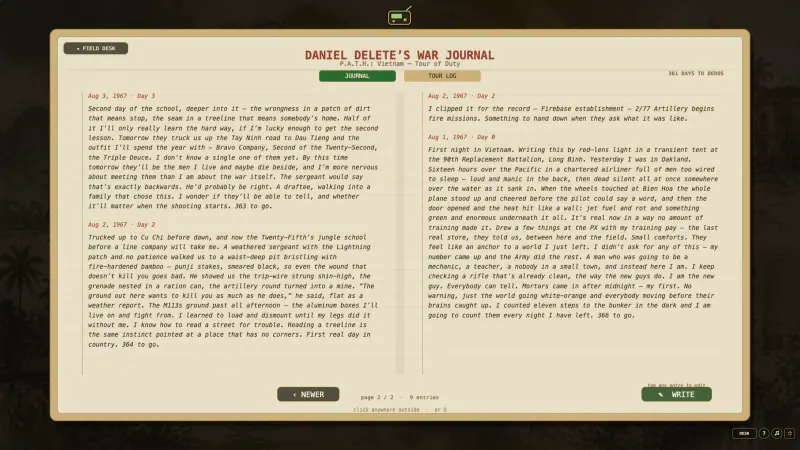
P.A.T.H.: Vietnam keeps two closely related records: the Journal and the Tour Log. They are not duplicates. One helps the day become memory. The other helps the player find what happened. Th…

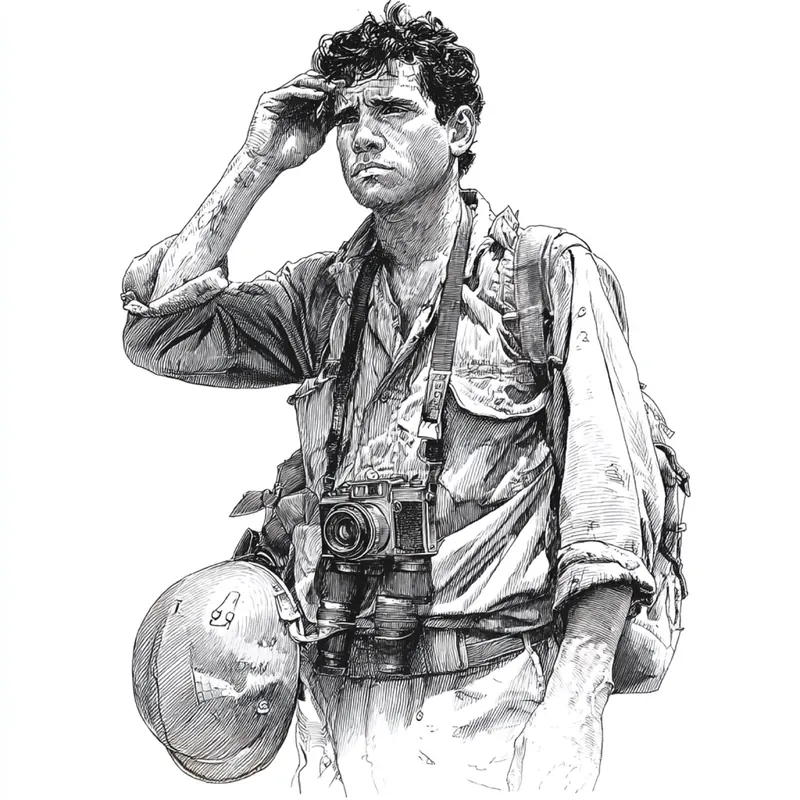
A soldier raises a camera to photograph a moment at the base

The Photo You Decided to Take

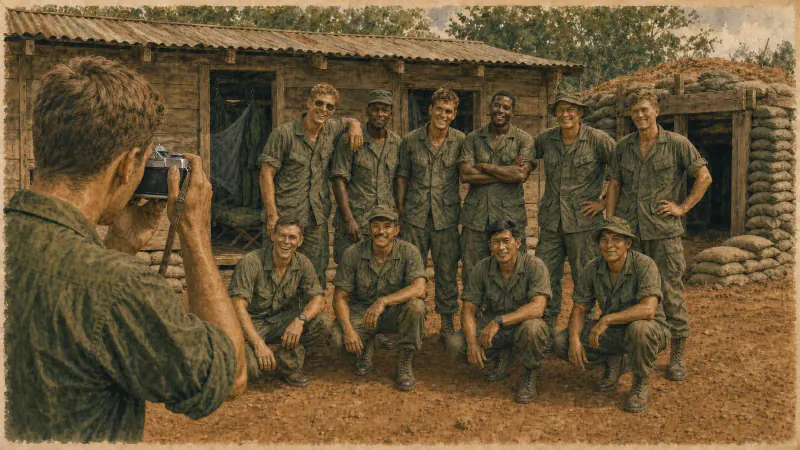
The Photo Album in P.A.T.H.: Vietnam begins empty. That matters. The game does not hand the player a completed scrapbook as a reward for reaching certain dates. To create a record, the chara…

The in-game tour calendar marks the passing days and the soldier's current status

The Calendar Is Counting With You

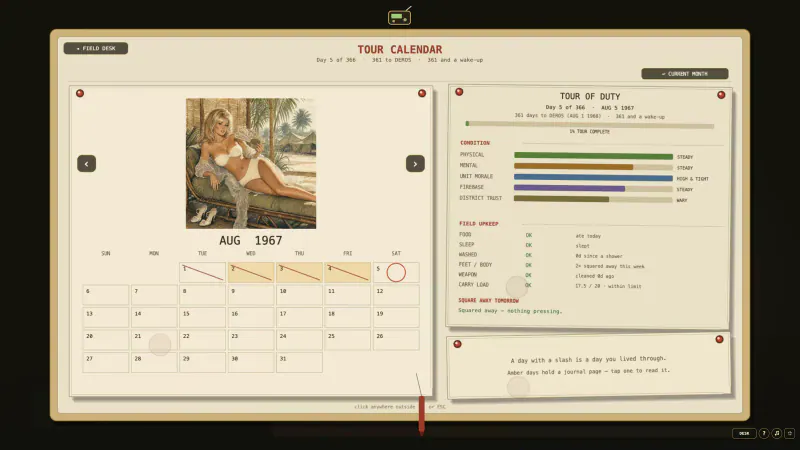
The P.A.T.H.: Vietnam Calendar does more than tell the player the date. It shows the shape of the tour: 1 August 1967 to 1 August 1968, crossing a leap day on the way. That creates 366 playe…

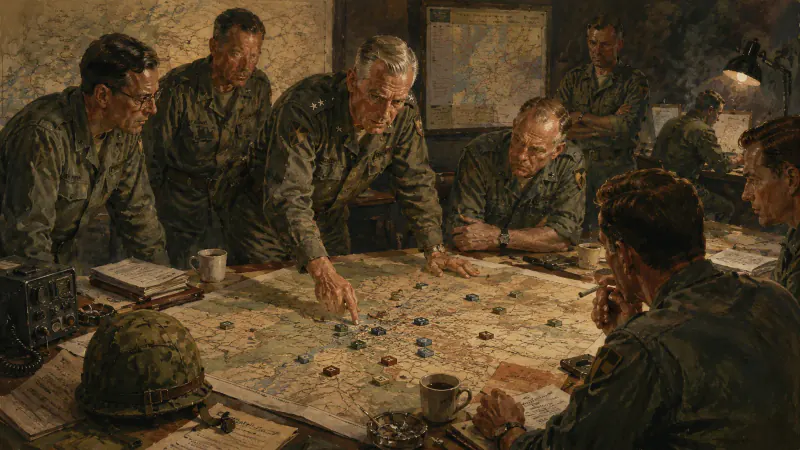
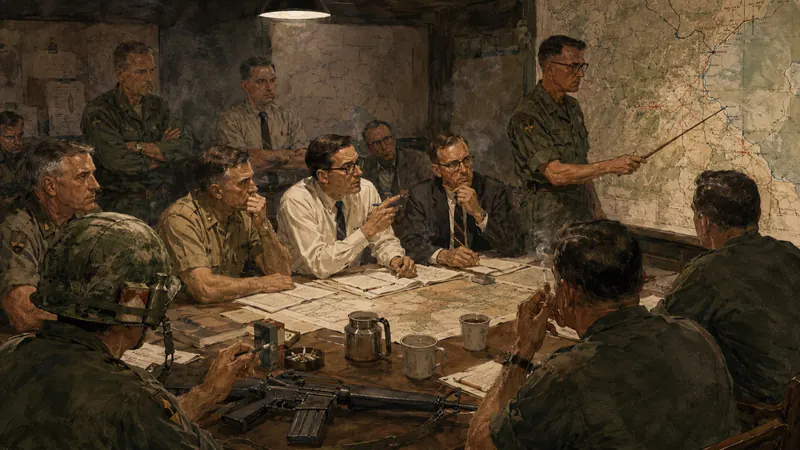
Officers work over maps and notes at a crowded nighttime planning table

Building the Tool Behind the Tour: From Foundry to P.A.T.H.: ANE

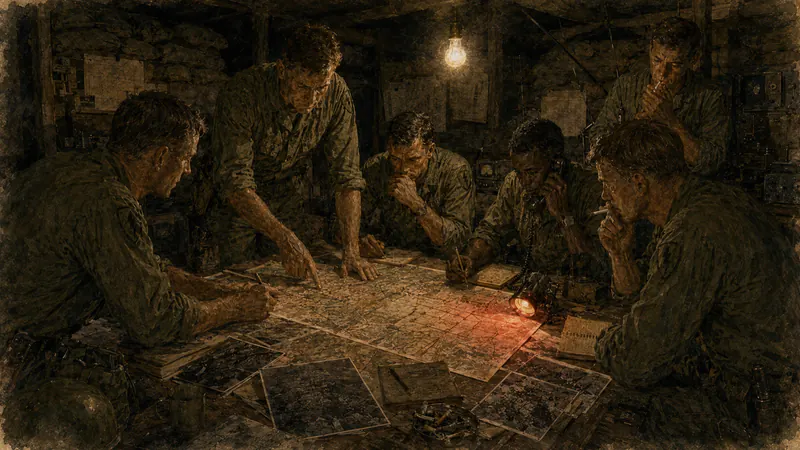
Today I am turning a recurring development problem into a tool of its own. My working name for the toolkit was P.A.T.H.: Foundry. But I'm thinking of renaming it P.A.T.H.: ANE—the Assisted N…

A field medal ceremony recognizes a soldier before assembled troops

Medals Arrive After the Moment

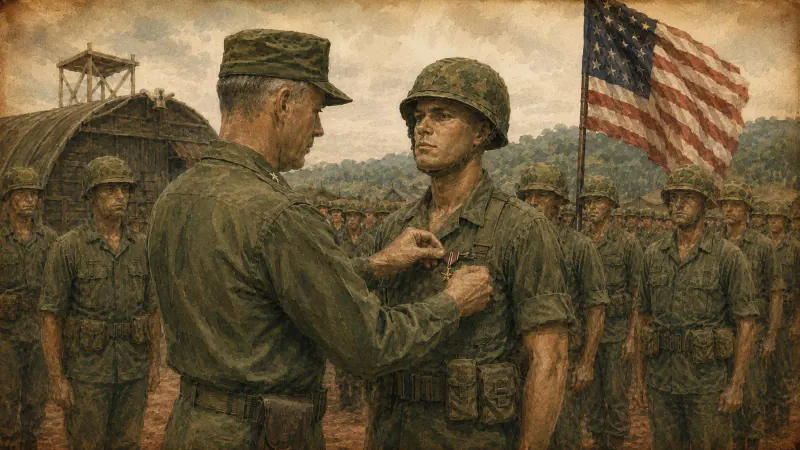
In many games, a medal appears the instant the qualifying action ends. The screen flashes, the reward sound plays, and the player knows precisely how the system judged the moment. P.A.T.H.:…

A soldier listens to a field radio inside a sandbagged position

The Radio Brings the World Together

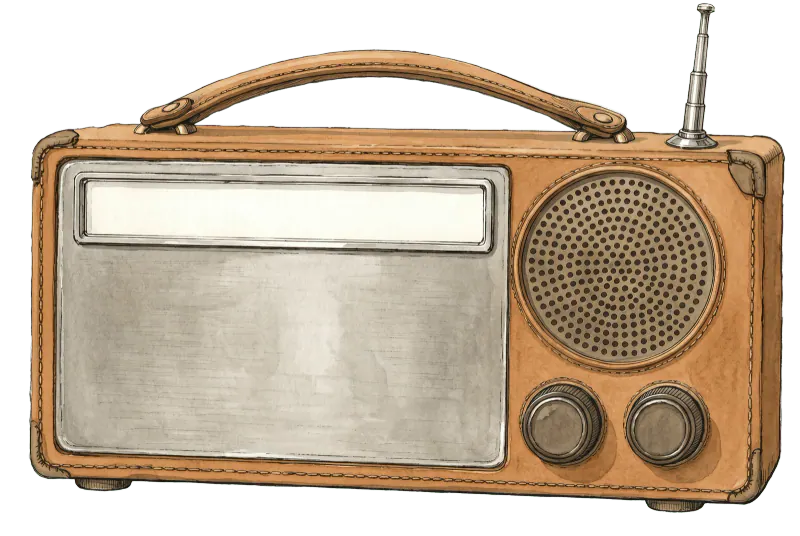
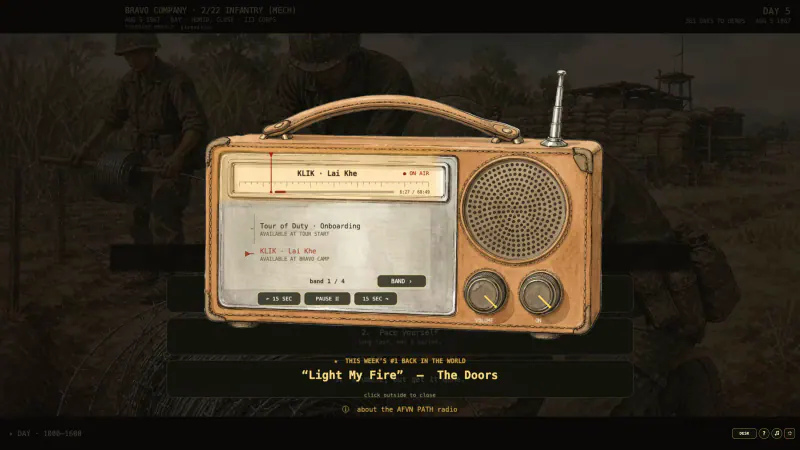
A radio can fill a small space with a world the player cannot see. That was always the reason to have one in P.A.T.H.: Vietnam. The player spends so much time close to one soldier—his desk,…

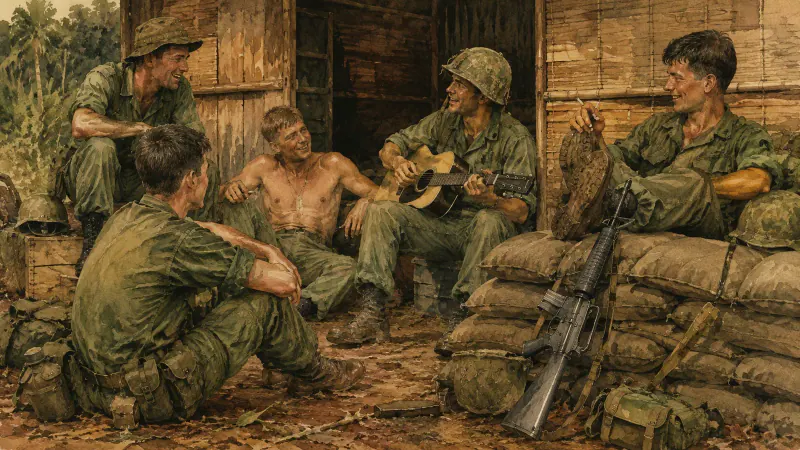
A squad shares a quiet conversation outside their hooch

Stress, Morale, Trust: The Numbers You Feel

P.A.T.H.: Vietnam tracks stress, morale, and trust, but it does not want the player staring at three coloured bars all day. The systems run beneath the fiction. Their effects appear in condi…

A historical event appears inside the game as part of the player's dated tour

History Without the Lecture

P.A.T.H.: Vietnam is built around a real unit, place, and calendar. That gives the game historical weight. It also creates a design problem. How do you help the player understand the year wi…

A soldier carefully cleans his rifle at a workbench

The Fixes a Player Can Feel

Development progress is often reported through things a player cannot feel: files changed, systems reorganized, checks passed, or a list of internal tasks. Those details matter while I am bu…

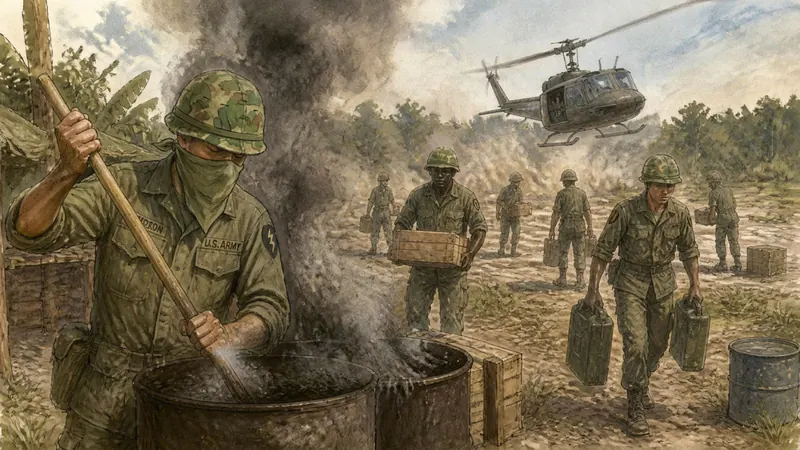
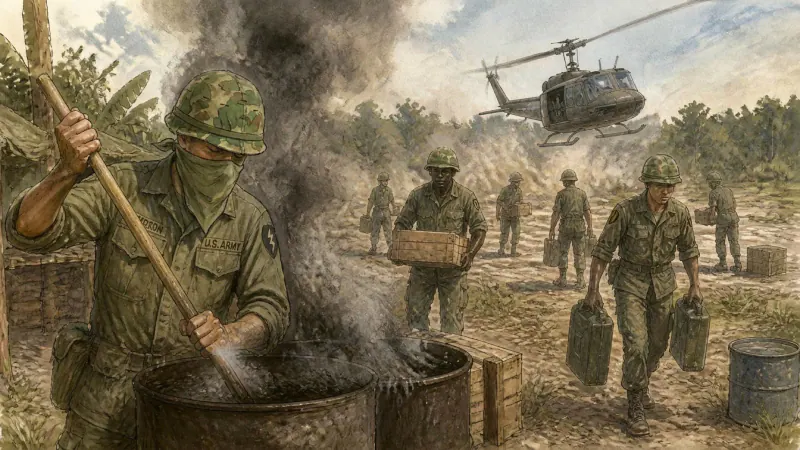
Soldiers carry supplies and work beside a helicopter in a smoky field

What OpenAI Build Week Taught Me About Finishing

It is 25 July 2026, four days after the OpenAI Build Week submission deadline. The P.A.T.H.: Vietnam Devpost page is the public record of the submission. This note is not an announcement of…

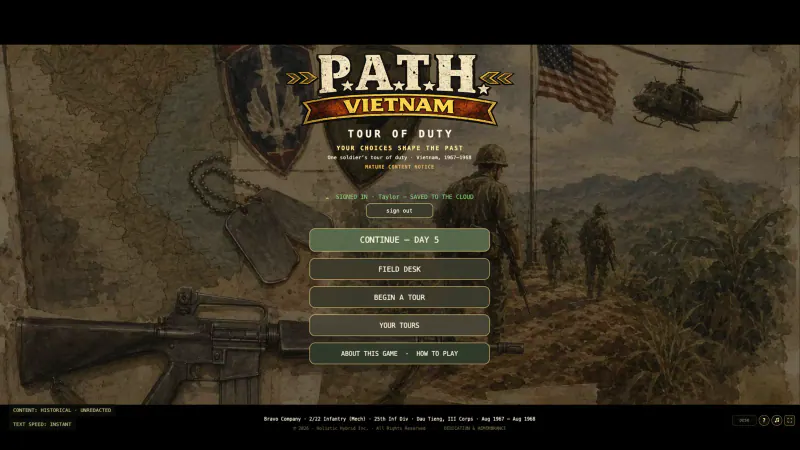
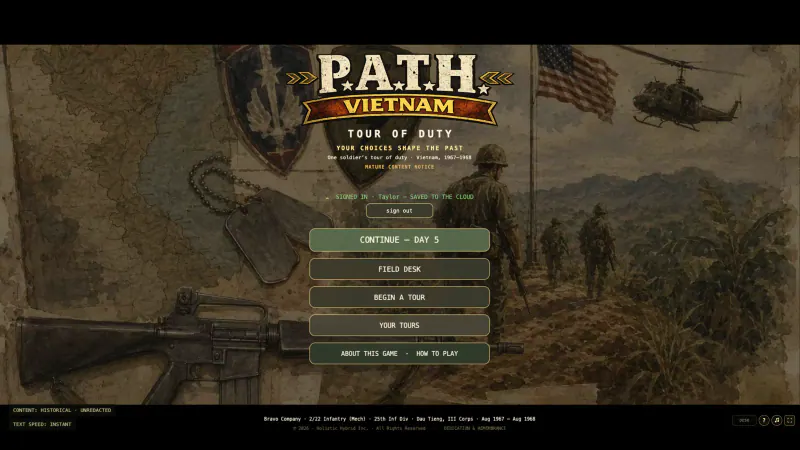
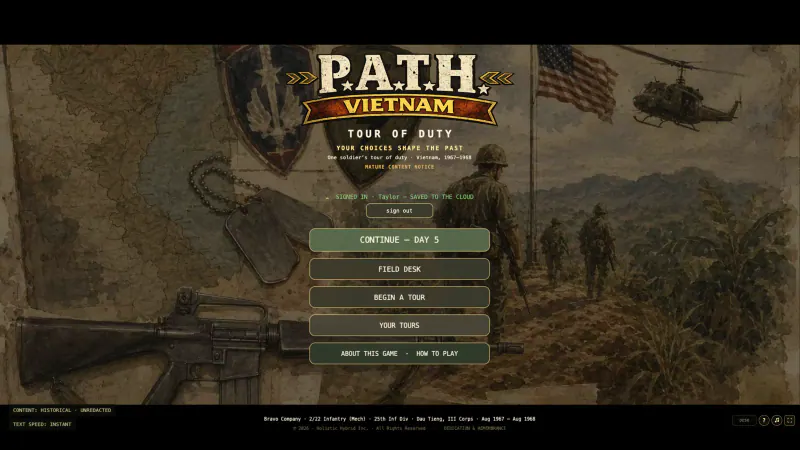
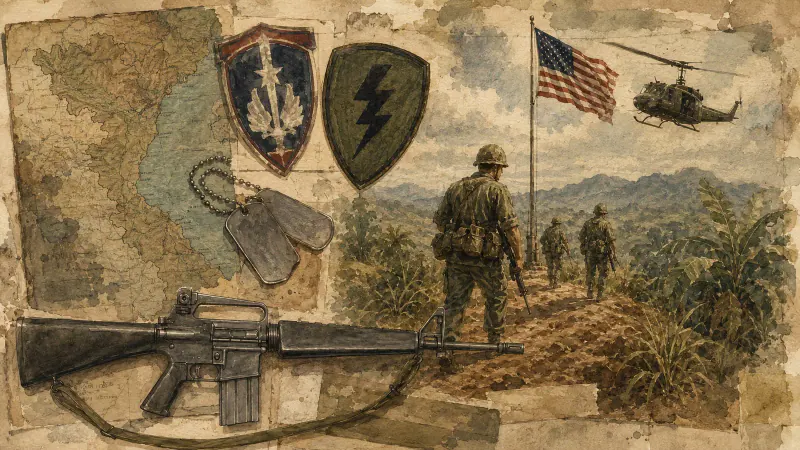
The current P.A.T.H.: Vietnam title artwork combines a map, unit insignia, field equipment and a patrol

Where Should P.A.T.H.: Vietnam Live?

Should P.A.T.H.: Vietnam be a web game, an itch.io release, a Steam game, an iPad app, or some combination of those? The honest answer is that I do not know yet. That is not a lack of ambiti…

The fictional AFVN Seven Programs album cover assembles the game's radio identities

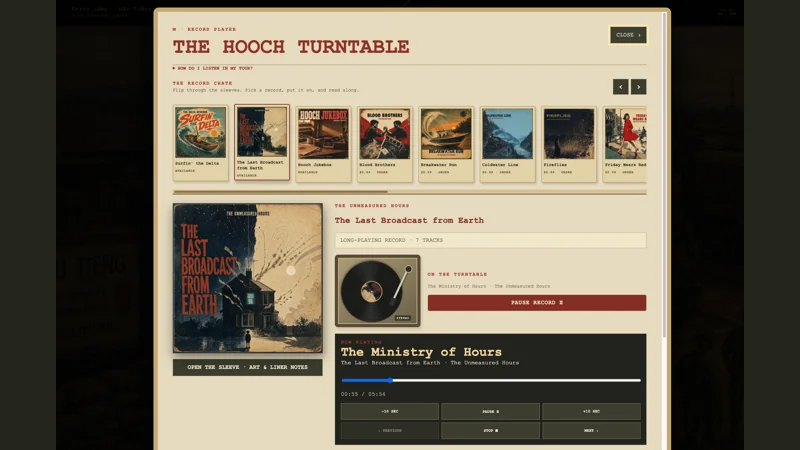
Rebuilding the Sound of AFVN

The radio began as a historical atmosphere problem and became a small world of its own. American Forces Vietnam Network broadcasts survive in archives, and parts of that broadcast history ma…

An original January calendar pin-up created for the soldier's tour

A New Pin-Up for Every Month of the Tour

The calendar in P.A.T.H.: Vietnam has always carried more emotional weight than a normal game calendar. It counts the days already survived and the days still standing between the soldier an…

The in-game supply depot presents a visually rich collection of period kit and necessities

Ninety Small Objects: Making the Tour Tangible

An inventory can be accurate and still feel lifeless. The game can say “camera,” “magazine,” “radio” or “M16 magazines” in a list and the rules will work. Weight can be counted. Money can be…

The game settings show controls for movement, screen flash and content sensitivity

Set the Intensity, Not the Outcome

P.A.T.H.: Vietnam deals with war, injury, fear, prejudice, loss and difficult choices. Those subjects cannot be made harmless with a settings menu. They can, however, be presented with more…

The advancement screen offers ways to spend experience on the developing soldier

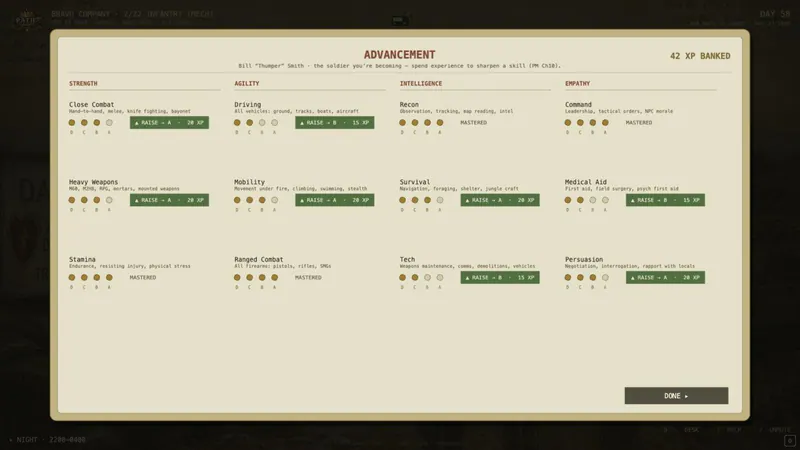
The Soldier You're Becoming: XP and Advancement

Experience points are easy to understand when they are a bar that fills until a new level appears. P.A.T.H.: Vietnam uses them differently. There is no single character level. The soldier ha…