
A Smaller Screen, a Longer Goodbye
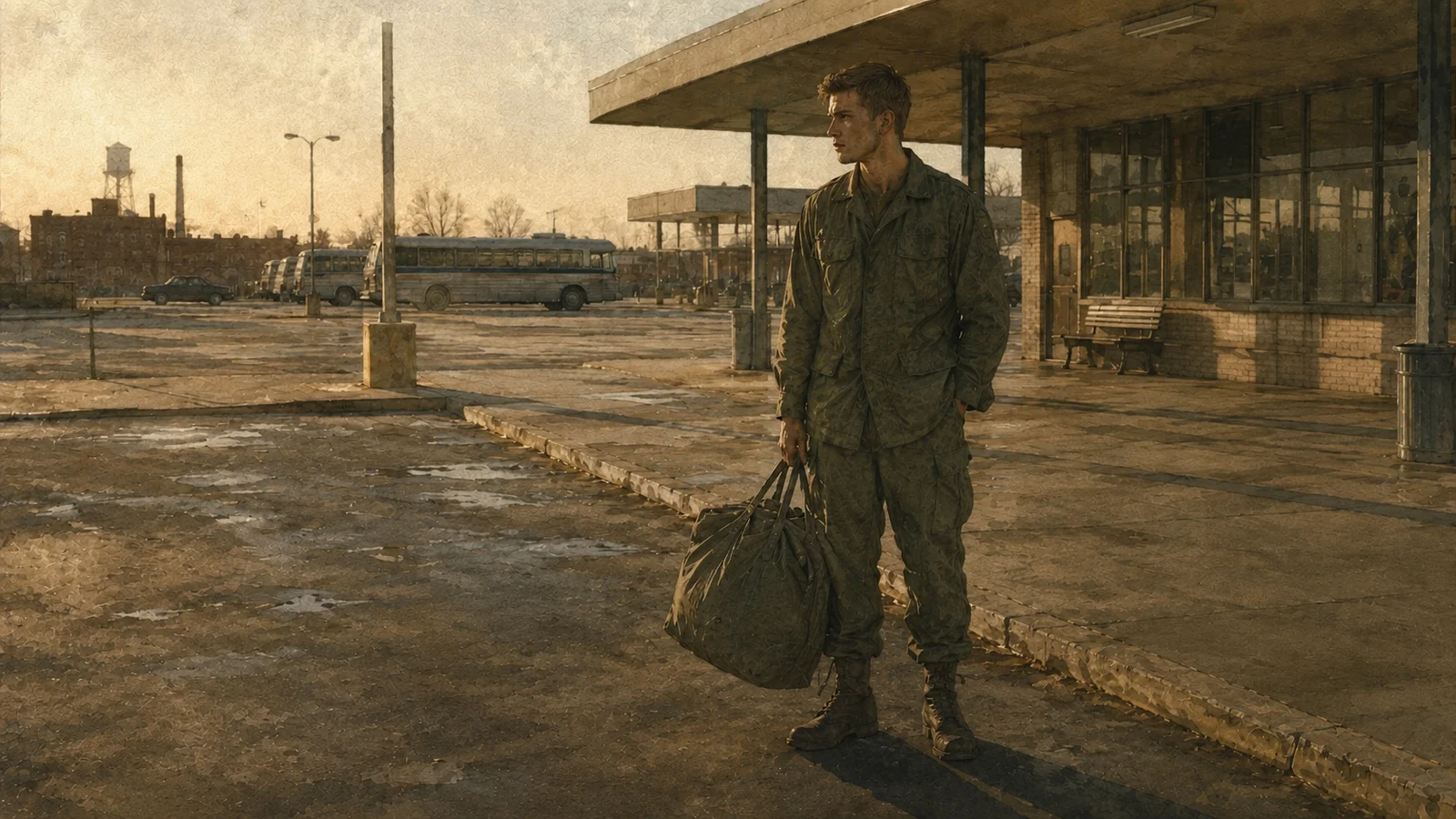
Two things have been keeping me busy during the September 15–23 work: making the game easier to read and move through on a small screen, and deciding what happens when a soldier's tour ends.
One sounds like interface work. The other sounds like writing. In practice, they keep meeting in the same place. I can write a scene that matters, then make it awkward to reach. I can put a striking picture in front of someone, then rush them straight past it. Neither is particularly satisfying.
I am writing this on September 23, with new work on both now in P.A.T.H.: Vietnam (Pivotal Actions Through History). The common question is how much room I give the player to notice what has happened.
The button still has to fit
On a large screen, I can get away with quite a lot. There is space around things. Navigation can spread out. A long label has somewhere to go. A phone-sized view is less forgiving, which is one reason it is useful to look at.
The recent work includes repairs to mobile navigation and more deliberate pauses around end-of-day artwork. Those are small descriptions for changes that affect the rhythm of reading. I want you to be able to find your way around without wrestling with the presentation, and to spend a moment with an image before moving into the next part of the day.
I also keep thinking about accessibility as a practical question. Can I read this comfortably? Can I tell which control has focus? Can I understand what pressing it will do? A setting hidden behind an awkward menu is less helpful than it looks in a list of features.
There is more checking to do on real devices and with real people. A narrow browser window helps me catch a problem; it cannot tell me what every hand, pair of eyes or evening of play will be like. I want specific feedback about where the experience becomes tiring. That gives me something more useful than congratulating myself because the page became narrower without falling over.
The end of the tour needs some time
I have spent so much of this project thinking about the road into Vietnam that it would be very easy to give the road out a few paragraphs and call it done.
But LifeP.A.T.H.—Previous Activities, Training, History—begins with a person who already had a life. The tour changes the circumstances around that person. An ending needs to remember there is a world beyond the last action in the campaign.
The recent homecoming work follows an ordinary completed tour through departure, the flight, contact with home, the first night, the first months and a look a year ahead. I wanted some distance between those moments. Arriving home and knowing what to do with being home are different experiences, and there is room for the player to think between them.
The people already in the soldier's life matter here. So do the things he hoped to do afterward. I do not want a generic family to appear at the airport just because a homecoming scene usually contains one. The game should carry forward the relationships it has actually established.
Everybody does not get the same goodbye
The other recent additions deal with medical aftermath, captured or missing endings, remembrance after a soldier is killed, and a life redirected by reassignment. These deserve their own treatment. Changing the last picture and keeping the same cheerful paragraph would miss the point completely.
In medical aftermath, there are questions about care, contact, belongings and what might come later. I want the writing to acknowledge what happened without handing out a miraculous recovery because the campaign needs a neat final page.
For a missing or captured soldier, the distinction between what is known and what is imagined matters. A later possibility can be worth exploring without turning it into an official answer the story has not earned. Remembrance has a different voice again: the soldier's death is not an invitation to give him another ordinary day of choices. There are people left to remember him.
Reassignment also has its own shape. Leaving one place does not necessarily mean going home, being discharged or starting the whole tour over. I am trying to give those differences enough space to remain visible.
These are additions to the current work, not a declaration that every ending, role and route has received all the attention it needs. I still have gaps to close. What pleases me is being able to give these particular departures more than a full stop.
Leave room for the reader
This brings me back to the screen. If a passage asks someone to think about a person they have spent time with, I ought to make it comfortable to read. If an image is meant to mark a pause, I ought to let it pause. The technical and narrative decisions keep tugging on each other.
I want this historical RPG to make room for ordinary detail without becoming an obstacle course of menus. I want the endings to recognise the life that came before them without pretending that one piece of writing can represent everybody's experience of war or return.
That is a fair amount to ask of a small game being built by one person. It is also the part that keeps me interested. There is something worth working on in that quiet moment after the obvious story seems to have ended.
If you try the prototype, tell me where the reading becomes awkward, or where the game moves on before you are ready. And if a homecoming in another game has stayed with you, I would like to know what it gave you time to notice.