
When a Passion Project Starts Taking More Than It Gives
This is less comfortable than a feature announcement and probably more useful: I need to take a break.
I spent roughly six intense months working on game ideas, prototypes, systems, writing and worlds. Much of that time felt productive. There was always another screen I could improve, another mechanic I could test, another research trail to follow and another tool that promised to make the next experiment faster.
I'm also dealing with work, ordinary life and everything that does not disappear simply because a creative project becomes exciting.
Eventually the energy stopped feeling like momentum. I was crashing.
Passion can hide the warning lights
A solo project does not have a producer standing outside the work and asking whether the current pace is sustainable. There is no colleague who automatically notices that yesterday’s clever idea has become today’s fourth redesign. When the creator, designer, researcher, tester and project manager are the same person, enthusiasm can overrule every internal objection.
I'm also working with ASD and ADHD. Those are not convenient creative superpowers or obstacles. They affect my attention, energy, transitions, sensory load and the way I can become absorbed in a system. Deep focus can help me connect details across a large project. It can also make it difficult to notice how long I have been sitting inside one problem or how far the scope has moved from the reason I opened the file.
The project was providing constant opportunities for immersion. That did not mean every hour inside it was healthy or useful.
Fast tools can make the tunnel longer
AI-assisted tools changed the pace of iteration. An idea that might once have remained in a notebook could become a working interface quickly. A rough system could produce code, copy, images and several alternate directions before I had fully decided whether the original direction belonged.
That speed can be wonderful. It can also remove the natural pauses that used to force reflection.
There is public discussion about “AI psychosis,” and the term is sometimes used carelessly to describe everything from overconfidence to serious distress. I am not using it here as a diagnosis. The practical danger I recognized in my own work was tunnel vision: losing scale, treating generated agreement as evidence, allowing the project to occupy every available thought and mistaking endless expansion for clarity.
An agreeable tool can keep helping long after the useful question should have been, “Why am I doing this now?”
The system does not become tired on my behalf. It does not insist that I eat, sleep, leave the desk or speak to someone who is not inside the project. Those boundaries remain human work.
Five versions were enough evidence
By April I had tried several variants across multiple platforms. I had learned from each of them, but I was still tempted to solve uncertainty by building another version.
That pattern needed interruption.
I did not need a sixth prototype to tell me that the project contained too many possible products. I needed to decide which product came first. I did not need more pages to prove I cared about the subject. I needed to decide what a player would actually do. I did not need another burst of late-night output. I needed enough distance to tell the difference between an exciting system and a necessary one.
So I am stopping.
Not forever. Not dramatically. I am taking a real break from the pressure to turn every thought into a deliverable.
Stepping away without abandoning the work
Rest can feel threatening when a project is held together by personal momentum. If I stop, will I lose the thread? Will the tools change? Will somebody else release a similar idea? Will the unfinished files become proof that I was never serious?
Those fears can keep a creator working after the work has stopped making sense.
The break needs to give me enough room to ask different questions:
- Which part of P.A.T.H. would I still want to build if nobody saw it this month?
- Which version offered a clear player experience rather than a catalogue of capabilities?
- What material was foundation, and what material was avoidance?
- Which decisions belonged to the game, and which belonged to a future product?
- What pace would let me remain interested without making the project the only measure of the day?
I do not expect to answer everything immediately. The first value is recovering the ability to ask.
Designing with intention
“Follow your passion” is incomplete advice. Passion can start a project. It cannot establish priorities, maintain health, check historical claims, clear rights or decide when a feature has enough depth.
Purpose is quieter.
Purpose asks what the player should feel and understand. It makes room for limits. It allows a good idea to wait. It treats a discarded approach as information instead of humiliation. It accepts that creating a historical world carries responsibilities that do not become less important when the creator is tired.
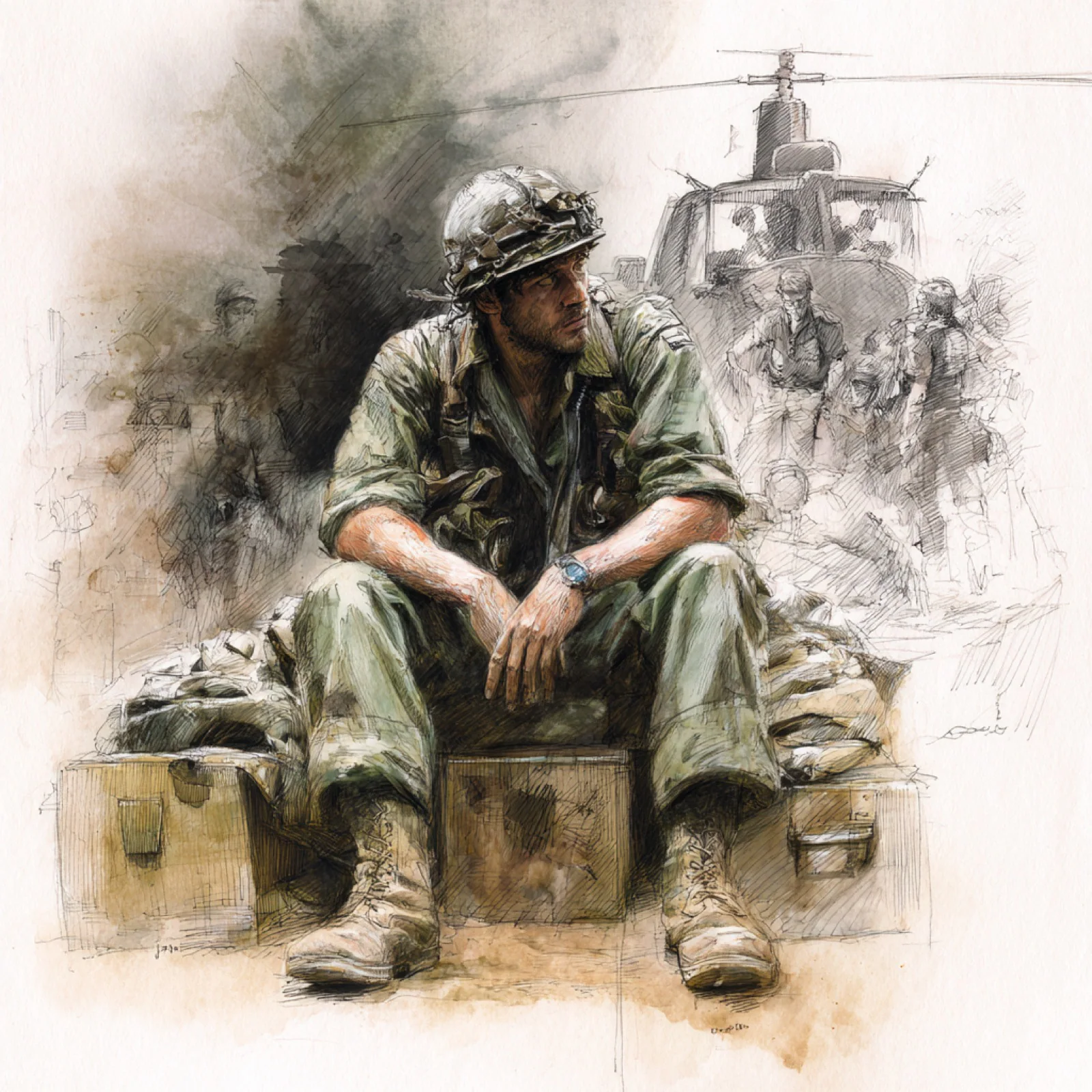
For P.A.T.H.: Vietnam (Pivotal Actions Through History), creating with intention means returning to the person at the centre. One player. One soldier. One tour. A year in which ordinary routines, major history and private choices have to remain connected.
That direction is present in the tabletop work and several prototypes, but wrapped it with too many simultaneous futures.
The pause is part of development
I will continue developing the project, but not by trying to complete every possible P.A.T.H. idea at once. A break will help focus my energy.
LifeP.A.T.H.—Previous Activities, Training, History is the name I use for the life that brings the character into this tour.