
The Cost of One More Die
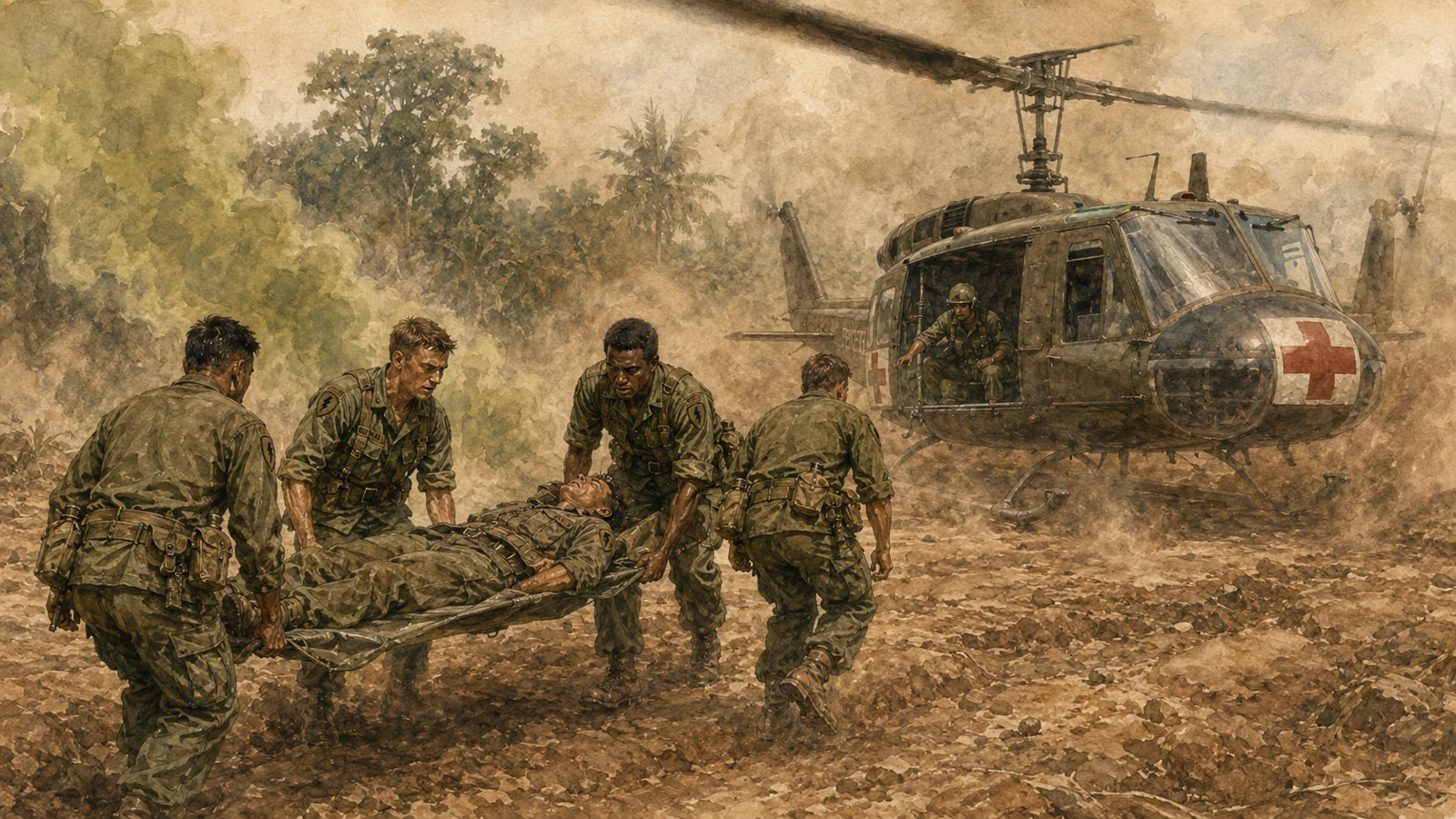
There is a very familiar moment at a roleplaying table when the player looks at a small pool and begins negotiating. Could this count as help? What about the equipment? Surely being very determined is worth something?
I understand the impulse. I like throwing more dice too. While building Lucky 8, though, I keep asking what that extra die represents. If the answer is only “we would all prefer a better result,” I have probably left something unfinished in the rule.
In P.A.T.H.: Vietnam (Pivotal Actions Through History), I want the pool to tell us about the moment: what is getting in the way, who is helping and what the Soldier is prepared to spend. More dice should come from a change we can point to.
Start with what is wrong
A Condition names a specific problem affecting a specific action. Rain on equipment. Darkness. A wound. Fever. Too little sleep. Too much weight. A radio net that will not stay clear.
Conditions remove dice. There is no cap on the number of relevant Conditions, because several bad things can happen together without consulting the character sheet. An eligible attempt still keeps its one-die floor.
I want the Narrator to say what the problem is and what could address it. A vague penalty leaves the player guessing. A wet map suggests a poncho, shelter or someone holding a light while it is unfolded. Those are modest actions, but modest actions fill a soldier’s day.
There is also a limit on our enthusiasm for subtraction: one cause is one Condition. Rain does not earn three separate penalties because it makes the map wet, the rope slippery and everyone miserable. We have established that it is raining. Charge for it once.
Give preparation something to do
The useful response to a poor pool may be to postpone the roll for a moment.
Get a light. Fetch a battery. Move the work under cover. Find a proper tool. Ask for time. Some problems cannot be removed immediately, but naming them lets the group make a plan instead of staring at a disappointing handful of dice.
This is one of the connections I want between Lucky 8 and the rest of the tour. The kit matters because it can address something real. Rest matters because the next task will still need a person capable of doing it. A companion matters because he can do something you cannot do at the same time.
LifeP.A.T.H.—Previous Activities, Training, History—gets the Soldier to that moment with a background and training. It does not arrange a dry, well-lit workplace wherever he goes. The situation has its own say.
Support belongs to another person
Each capable helper adds one Support die by spending their major action on a concrete contribution. Several helpers can coordinate, with a hard cap of three Support dice in total.
Tell the table what the helper is doing. Holding the light. Keeping a net clear. Covering an opening. Carrying part of a load so somebody else can move. “I help” starts a conversation; it does not finish one.
The helper has to be present, able to contribute and exposed to the situation. Their action is now committed. They are not also taking their own shot, making an unrelated repair and wandering off to do something more convenient.
I like that cost. It makes cooperation a decision rather than a background benefit awarded to everyone standing in the same room. You can look across the table and know somebody chose to put their turn behind yours.
Support arrives after Conditions. It can take the final pool above the personal eight-die cap, because the cap describes one person’s body and training. The helper is another person. I would like the rules to remember that.
Rush is a decision made before the result
Rush is the Soldier pushing himself in immediate danger. It adds one die and collects FUBAR after the action.
The first Rush in a sleep cycle costs one FUBAR. The second costs two and leaves the Soldier Unconscious. There is no third Rush tucked away for the player who asks especially nicely.
You declare it before rolling. I do not want Rush to become something you apply after discovering that the total is one point short. The choice is to spend yourself now, knowing that the cost will arrive even if you succeed.
That can produce a good, uncomfortable decision. You may need one more chance to get someone to cover or finish an urgent task. You may also decide that collapsing afterward would leave the group in a worse position. Neither answer is a failure to play heroically. It is a person weighing what they have left.
If the first Rush fills the FUBAR bar, check COH plus Unit Cohesion against 20 after the action. Failure adds one PTSD; success adds none. There is no Break-table roll. Reset Raw FUBAR to zero and rebuild Current FUBAR from the PTSD floor.
The second Rush needs particular care: account for the action’s immediate stress and the +2 Rush cost together. If either reaches 8, add one PTSD automatically, once for that action, with no Break check or Break-table roll. Reset Raw FUBAR to zero, rebuild the PTSD floor and apply Unconscious. Even below 8, a second Rush still leaves the Soldier Unconscious. I want that cost understood before anyone chooses the extra die.
The die helps without becoming your private good fortune
Support and Rush dice contribute to the action total. Their natural eights explode once, just like the other action dice.
Personal Luck tiers work differently. Count only natural eights in the acting Soldier’s own capped Stat-and-Proficiency pool after Conditions. A helper’s eight helps the task but does not become your Lucky Streak. Neither does a Rush die.
Different coloured dice make that distinction easier to see. There is no need for a ceremony. Just keep track of which dice came from the Soldier and which arrived through help or extra effort.
To me, that is a small way of keeping the scene honest. Somebody else’s excellent contribution should remain somebody else’s contribution. The total can belong to the group’s plan without swallowing the people who made it possible.
One small example
Suppose an eligible task begins with five personal dice. Two relevant Adverse Conditions, each removing one die, reduce that to three. A capable supporter commits a major action and adds one, taking the roll to four. Declaring Rush would make five, with its cost waiting after resolution.
Before accepting that cost, look at the Conditions again. Can you remove one? Can the group change the method? Is there time? The best decision may happen before the extra die is picked up.
That is what I am trying to build. A pool that grows because the players did something, and costs that remain visible after the excitement of the roll.
I still enjoy a generous handful of dice. I just want to know who carried it to the table.