
What was Rebuilt Between the Scenes: A Week of Reliability Work
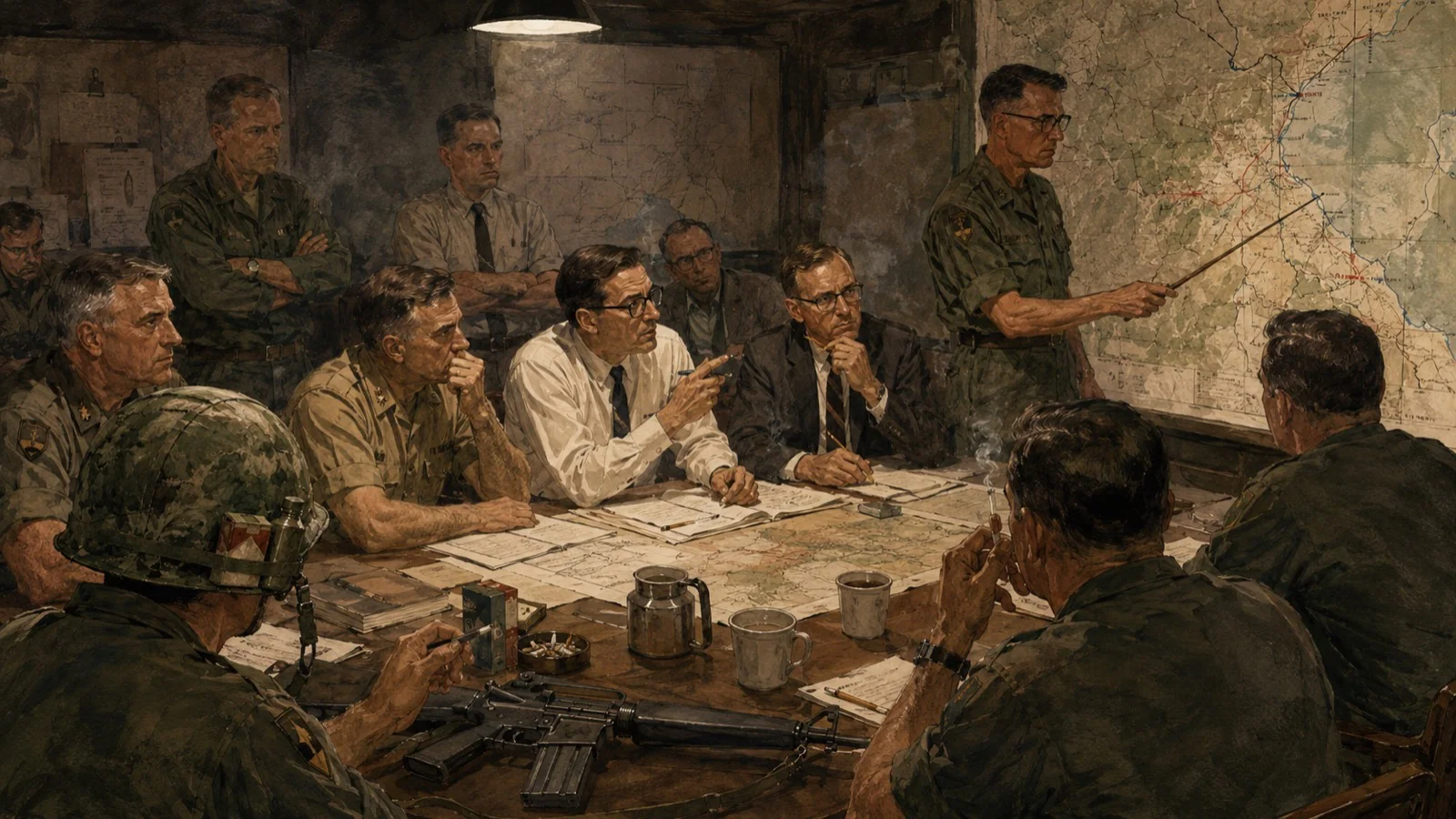
This week I have spent a lot of time on what happens between the scenes. It is less photogenic than new art, but it matters: a parcel arriving, a tour surviving a reload, or a setting still doing what the player asked. I want to document those joins while I am working on them.
The most important work in a long narrative game is not always the easiest work to put in a trailer.
This week, much of the development effort went into the connections between scenes: whether the same tour survives another device, whether a package actually reaches the footlocker, whether a historical moment arrives as history instead of pretending to be personal mail, whether a player can reduce flashing or decision pressure without weakening the fiction, and whether the game remembers what it already resolved after a reload.
Those systems are easy to describe separately. In play, they all belong to the same promise. A year long tour has to remain one life.
The tour has to come back intact
Save compatibility received the kind of attention normally reserved for a visible feature.
Fresh campaigns and older long-tour states now have broader regression coverage across inventory, mail orders, relationships, event history, current shifts, and the committed outcomes that must not reroll when a browser reloads. Cloud-backed tours also gained stronger protection against stale copies and deleted tours returning from another device's local cache.
I tested real continuity between an iPad, laptop, and desktop. That is meaningful play evidence. It does not make every future deployment automatically safe, and it does not replace production verification, but it demonstrates the experience the system is meant to protect: open the same soldier elsewhere and continue from the same life.
Mail became one system instead of three competing stories
Mail Call had accumulated overlapping paths.
Scheduled letters, personal care packages, and PACEX fulfilment could all reach the same ceremony through different code. In one failure mode, reading one source could clear another. A self-order could be charged, persisted, delayed, and marked delivered without putting the actual product into the visible footlocker. A gift reply could describe the wrong kind of item because the response logic knew the recipient but not the product.
The current mail work unifies those obligations in one durable queue. Letters the player sends create committed reply obligations. PACEX products retain their exact identity. A radio sent to a friend should be answered as a radio, not as a generic romantic gift. A self-order reaches the base through Mail Call and then becomes a visible owned item. Family return packages can carry their stated contents into the locker instead of existing only as prose.
All ninety PACEX products now have explicit product semantics for this system. That does not mean ninety bespoke paragraphs repeating a product name. It means the response can use product family, recipient, occasion, relationship, and authored variation without confusing a camera with a radio or a jewelry case with an action figure.
The final proof still belongs in ordinary play: place orders, live through the transit time, receive the parcel, open the order log, and verify the item and reply on a later Mail Call. Long systems earn trust slowly.
Accessibility became a presentation system
The game now treats motion, flashing, content treatment, text presentation, and decision pressure as related player preferences instead of scattered switches.
The persistent warning control can reopen them during play. Motion and flashing can be reduced independently. Decision pressure can remove the visible countdown fuse from rapid choices. Historical, balanced, and redacted content modes preserve choices and consequences while changing how marked passages are presented.
The Pocket Guide keeps its page-turn motion in the full setting and changes immediately in reduced-motion modes. The same principle applies across screen shake, pulses, fades, and other effects: atmosphere should never depend on making the interface physically unsafe or unreadable.
There is still substantial accessibility work ahead. Phaser draws much of the active narrative into a canvas, which screen readers generally cannot understand. A complete accessible narration and action layer needs DOM equivalents for the current beat, choices, consequences, and status updates. That is a real product feature, not a few labels around the canvas.
Onboarding had to begin with the world, not a settings form
The first attempt at presenting the new experience settings exposed a design mistake. A technically clear menu became the first thing a new player saw after choosing a new tour. It explained the controls but interrupted the invitation.
The corrected flow opens on the illustrated Southeast Asia plate. The game briefly explains the experience in its own narrative interface, offers settings now or through the persistent control later, and then asks whether the player wants the shorter Field Briefing or the complete Full Induction.
That sequence sounds simple because it should feel simple. It took several revisions to recover the actual intention: show the place first, explain the player's control over presentation second, and ask about the length of induction third.
The lesson was not to make onboarding smaller at any cost. It was to write down the exact player-visible sequence before changing the transitions.
History stopped hiding inside somebody else's letter
Some historical events had been reduced to under-the-radar narrative hooks. The Summer of Love was the clearest example: a broad public event arrived as if a particular sister had written about it, even when the player had not chosen a sister as a correspondent.
The first recovery wave now promotes eighteen verified events into proper historical cards. These events can carry their date, context, source treatment, content mode, journal record, and clipping replay without inventing personal mail. The player's response can still affect stress or morale where the game calls for it. Moving the event into the history system does not remove its human impact; it makes the source of that impact honest.
Nine additional public-history candidates and ten stateful mail records remain separate follow-up work. The aim is not to interrupt the player with every fact in the database. It is to recover the strongest moments whose current presentation hides their meaning or confuses public history with private correspondence.
The footlocker became more consistent
Magazines are now treated as permanent collection items after purchase. Consumables such as foot powder, insect repellent, and iodine use the same canonical supply whether issued or bought at the PX. Ration capacity now distinguishes the fighting load from the footlocker: three may be carried and two more stored.
The frameless tropical rucksack is a standard option rather than contraband that fell off a manifest. Replacement vouchers provide a route for issued equipment that wears out or disappears. Every soldier begins with a replaceable padlock, while the game is free to model later loss or breakage instead of silently recreating it forever.
The Pocket Guide also became a zero-weight permanent issue item. Opening it from KIT launches the complete recreated guide and returns to the same inventory context when closed. The object in the footlocker and the readable artifact in the Field Desk are now the same part of the soldier's life.
The game became lighter without throwing away its masters
Runtime images were compressed from preserved higher-quality sources, including a major image-payload reduction and a separate portrait pass that kept approved full-size records outside the served game. Dispatch card derivatives were also created at responsive sizes so the public site no longer needs full-size art for every small card.
The current strict runtime manifest contains 916 files and measures about 634 MB. Roughly 301 MB of that is twelve audio files. The image audit finds no runtime image over one megabyte, but audio remains the largest payload class. Further audio work must begin from preserved masters and compare formats by size and listening quality. Recompressing already compressed runtime files would only hide degradation inside a smaller number.
I open the game to public testing..
The landing page, Dispatches, and live game are now all on the live deployed site.
They are not a declaration that the game is finished.
The next priorities are quieter: finish long-tour acceptance for PACEX and R&R, build a stable browser smoke suite that does not interfere with Phaser, complete the accessible narration layer, continue mapping narrative text to better art, verify production migrations independently, and reduce payload where the player cannot see a quality loss.
History sets the mission. The work between the scenes is what lets the player's choices survive it.
These are my development notes for P.A.T.H.: Vietnam (Pivotal Actions Through History).
LifeP.A.T.H.—Previous Activities, Training, History is the name I use for the life that brings the character into this tour.