
Putting P.A.T.H.: Vietnam Online
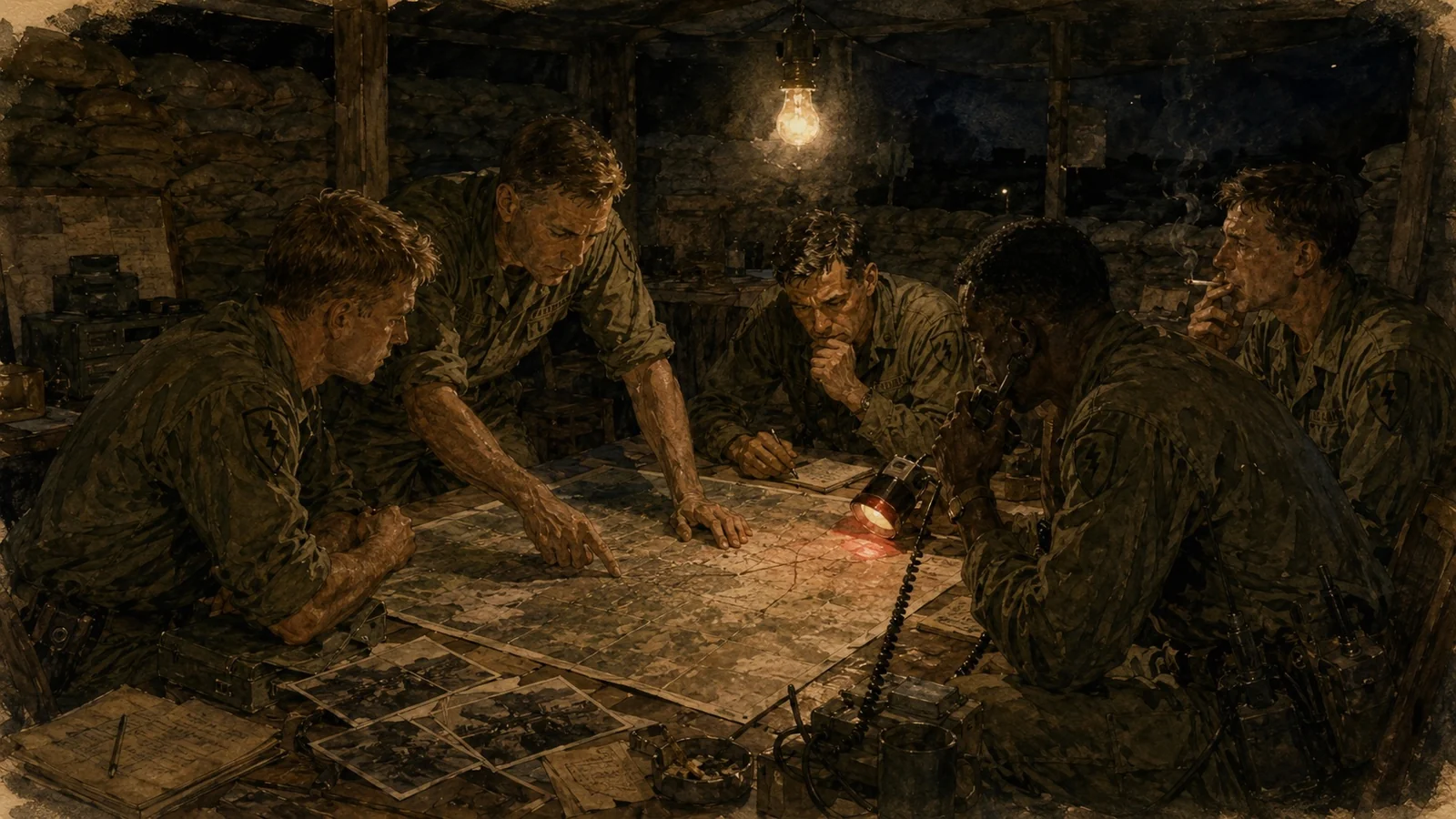
For months, I have been able to explain a surprising number of problems by saying, “Give me a second, I know where that is.” Very convenient when I am the person building the game. Less useful when somebody else opens it.
Between September 15 and 23, getting P.A.T.H.: Vietnam (Pivotal Actions Through History) out of that comfortable little arrangement has become a proper part of the work. The website is up, the revised Dispatches are there to read, and the browser prototype has a place where people can enter the tour. I am writing this on September 23, looking back over that stretch. There was no magical afternoon when the whole project became finished. There was a succession of things that needed to make sense without me standing beside them.
A front door is part of the game
I used to think of the website as something I would get back to after the interesting work. The interesting work, naturally, kept multiplying. Another scene, another piece of equipment, another explanation that was perfectly clear until I read it again the following morning.
Eventually the front door becomes a design problem of its own. What am I asking someone to do? Read about the setting? Look at the art? Try the prototype? How much do they need to understand before that first click?
I want the answer to be straightforward. You can read the Developer's Dispatches without committing yourself to a campaign. If the idea interests you, the browser prototype is the next step. The public landing page and Dispatches are open to read. Entering the game uses Google sign-in, and the current prototype keeps cloud saves so a tour can be resumed. Those are useful steps toward letting someone spend time with the game beyond a single sitting. It is still a prototype, with unfinished work and things I need people to help me spot. The site needs to tell the truth about that. A beautiful picture cannot explain away a confusing beginning.
This is a solo Vietnam War RPG built around a person moving through a tour. The historical setting gives that person a place and a time. The small decisions give me somewhere to put the story: what he carries, who he writes to, what he notices, what he puts off until tomorrow. I need that to come across before I start explaining the less charming details of my development week.
The first person through the door knows less than I do
That sounds obvious. I keep finding fresh ways to forget it.
I know why a piece of paperwork matters. I know which menu contains the thing I am looking for. I know that LifeP.A.T.H.—Previous Activities, Training, History—means the life someone had before the uniform. A new player has every right to arrive without knowing any of that.
Putting the prototype online makes those assumptions harder to hide. The introductory copy, the route into play and the way the site points back to the game all need to agree. I can spend an evening improving a feature and still leave somebody wondering how to reach it. That is a useful correction to my priorities, even when it is an annoying one.
The same applies to the Dispatch archive. I wanted the revised pieces to live at the addresses people already had. Moving an article every time I find a better way to describe it would turn following this project into a hunt for a missing page. I want people to find the article they came for.
Yes, I am building with AI tools
I am working solo, with Codex Astra and Claude Fable agents helping me develop, review and revise the project. If you have followed the earlier posts, that probably will not come as a great shock. Exploring what these tools can help me build is part of how I ended up here in the first place.
People call some of this vibe coding. Fair enough. There are certainly moments when I am following an idea to see whether it holds together. But I still have to read the result, check it against the game I mean to make, and decide what deserves to stay. A confident explanation of a feature is very easy to produce. Making the feature behave the way that explanation promises takes more care.
I am interested in showing that work without turning every Dispatch into an advertisement for the tools. The useful story is often the correction: the assumption I missed, the bit of wording that hid the problem, the screen that made sense only because I had stared at it for too long. Those are things another solo developer might recognise, whatever they use to build.
What I want from the next visitor
I would much rather hear “I got lost here” than have someone politely disappear. A particular screen, a particular sentence, a decision that seemed to come out of nowhere: those details give me something I can work on.
Historical gamers may notice something different from a tabletop player. Someone coming from interactive fiction may ask why I need a number where a sentence would do. Somebody opening the game on a smaller screen may find the button I managed to hide in plain sight. I need those different readings.
Going online has made the project more real in a very ordinary way. There is now somewhere to send people, and something for them to push back against. I am pleased about that. I am also aware that “it works when I do it” has had a long and comfortable career on my own screen.
I want to find out where it falls short for somebody else.