
The Photo You Decided to Take
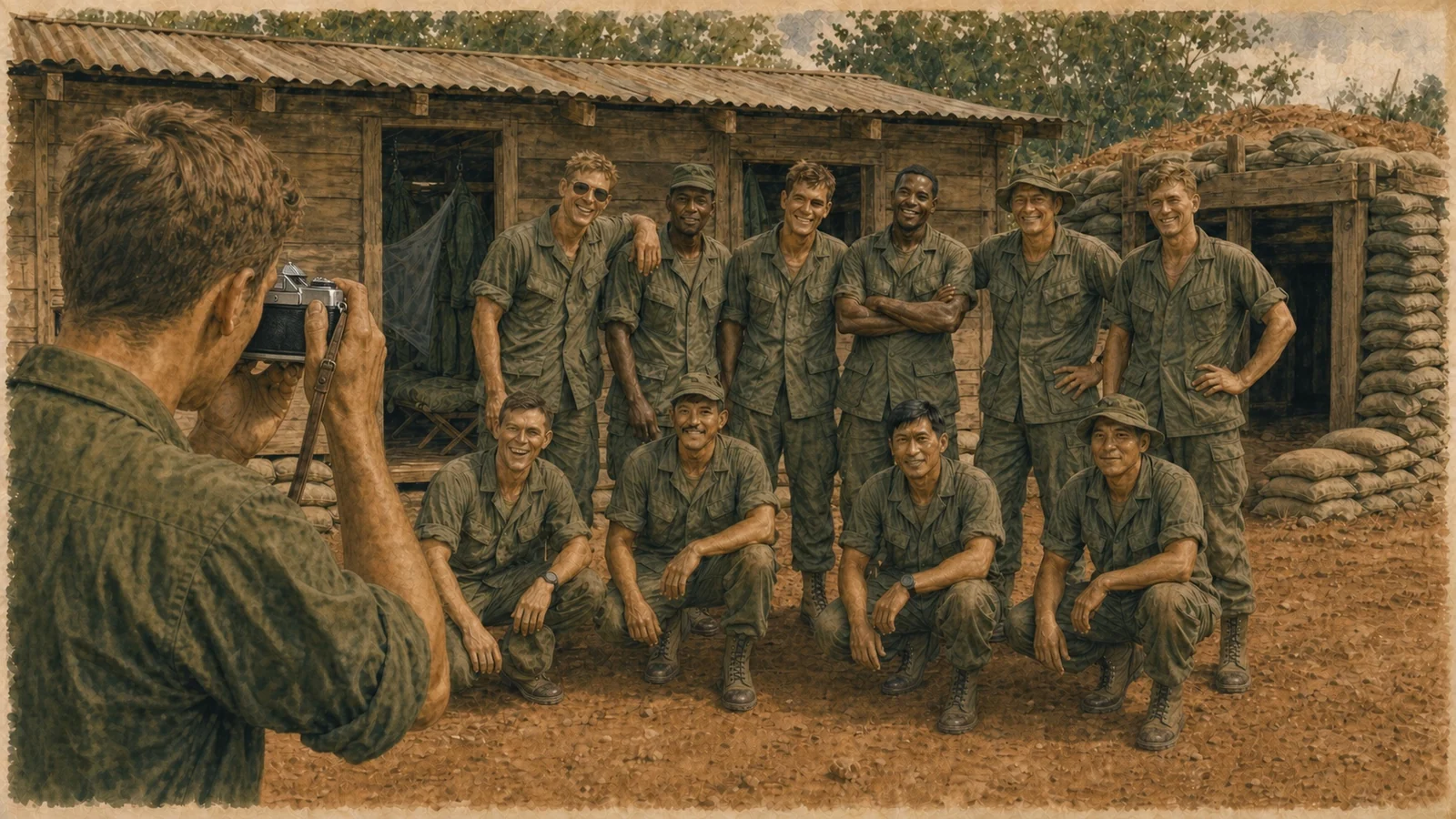
The Photo Album in P.A.T.H.: Vietnam begins empty.
That matters. The game does not hand the player a completed scrapbook as a reward for reaching certain dates. To create a record, the character needs access to a camera and film, an available quiet moment, and the decision to use one exposure on what is in front of him.
The photograph becomes meaningful because something else could have happened in that shift.
First, the camera
A camera can be purchased through the period PX system. Film is a separate, finite supply. The character must own the equipment, have exposures remaining, and carry or access what is needed to take a photograph.
This puts photography inside the same practical world as the rest of the kit. A camera has cost and weight. Film runs out. A device left safely in the footlocker cannot capture a moment outside the wire.
The system does not ask players to become photographers or simulate aperture settings. The practical requirements exist to give the choice substance.
Buying the camera says, “This character wants a record.” Carrying it says, “The record matters enough to make room.” Pressing the shutter says, “This is the moment.”
What the album actually preserves
The game creates a captioned album from the tour moments the player chooses to photograph. It is an authored game record, not an external image-generation service and not a claim that a historically real photograph exists.
That boundary is important. P.A.T.H.: Vietnam can evoke the visual language of mounted prints and field albums without inventing archival evidence. The caption belongs to the fictional character's tour.
The album presents newer and older shots as a sequence. Over time, the pages become a second calendar. Faces, locations, ordinary routines, and selected events sit beside one another without a score attached.
The number of photographs is visible from the Field Desk, but quantity is not the goal. Thirty careful images can say more than three hundred automatic ones.
Why spend a Minor action?
Taking a photo is a Minor action. That label can make it seem like free decoration. It is not.
A Minor action could also be used for conversation, correspondence, maintenance, reading, radio, shopping, or another personal need. Photography competes with those possibilities.
This is good. Memory takes time.
The player may face a quiet dusk where the squad is together, the light is changing, and nothing historic appears to be happening. Taking the photograph can feel less useful than cleaning the weapon or writing home. Months later, that ordinary image may be the one that matters most.
The game cannot know this in advance. It gives the player room to discover it.
The problem of proof
People take photographs for different reasons.
One character wants proof that the place and people existed. Another wants something safe enough to send home. Another is fascinated by machines, roads, or the physical environment. Another takes very few photographs because the camera feels intrusive.
The player's choice can also carry discomfort. Not every event should become a picture. Historical games need restraint around suffering. The existence of a photo action does not mean every scene is available for collection.
P.A.T.H.: Vietnam is strongest when the album feels like a person's selective memory, not a trophy wall.
Film makes attention finite
A roll contains a limited number of exposures. When it ends, the player needs another. This old physical constraint produces a useful design effect: attention cannot be infinite.
Digital life encourages taking many photographs and sorting them later. Film asks for a decision before the shutter.
That does not mean every shot must be solemn. A foolish moment, an ordinary object, or a relaxed squad can deserve space. In fact, those images may protect the album from becoming a collection of official-looking milestones.
The best question is not “Is this important enough?” It is “Would this character want to see this again?”
A player-side photography style
You can give each campaign its own style.
A social character may photograph people. A Mechanic may preserve vehicles, tools, and the ingenious repairs that kept them moving. An RTO may be drawn to radios and the people gathered around them. A short-timer may suddenly take more photographs because ordinary scenes are becoming final ones.
You can also set a simple personal rule:
- One photograph each week
- Only people
- Only life inside the wire
- One photograph after every major threshold
- No photographs until the character buys the camera with his own pay
The game does not enforce these rules. They help the player develop a point of view.
The album and the journal
Photographs connect naturally to the Journal and Tour Log.
The log records that the photo was taken. The album keeps the captioned image. The journal places it inside the day. A private note can preserve what the picture left outside the frame.
This creates a productive gap. The photograph may look calm. The entry may say the character was exhausted. The caption may name a person whose later absence changes how the page feels.
The game does not need to alter the old image. Time does that.
A record you chose
At the end of the tour, the Photo Album will not show everything that happened. It will show what the player stopped to preserve.
That incompleteness is its truth.
The Service Record lists what the institution noticed. The Calendar lists the days. The Journal describes the flow. The album holds a smaller, stranger selection: the instant when the character looked at the year and decided, “Keep this.”