Carried, Locker, Ruck: Building a Loadout
A good P.A.T.H.: Vietnam loadout answers three questions:
What stays on the soldier? What rides in the rucksack? What remains in the footlocker?
The answers change with the role and the day. This guide is not a universal packing list. It is a method for building one without turning the Kit screen into homework.
Step one: name the day
Start with the expected duty.
A day at Dau Tieng does not require the same arrangement as a foot patrol. A mounted road-security run creates different possibilities from a night watch. A longer movement makes sustainment gear more important. A short duty may make the full ruck unnecessary.
You will not always know what is coming. The war can interrupt a plan. The aim is not prediction; it is reasonable readiness.
Write the day's purpose in one phrase: camp duty, perimeter watch, foot patrol, mounted movement, specialist task, or recovery. That phrase helps every later decision.
Step two: protect the role
Identify the equipment that makes the archetype itself work.
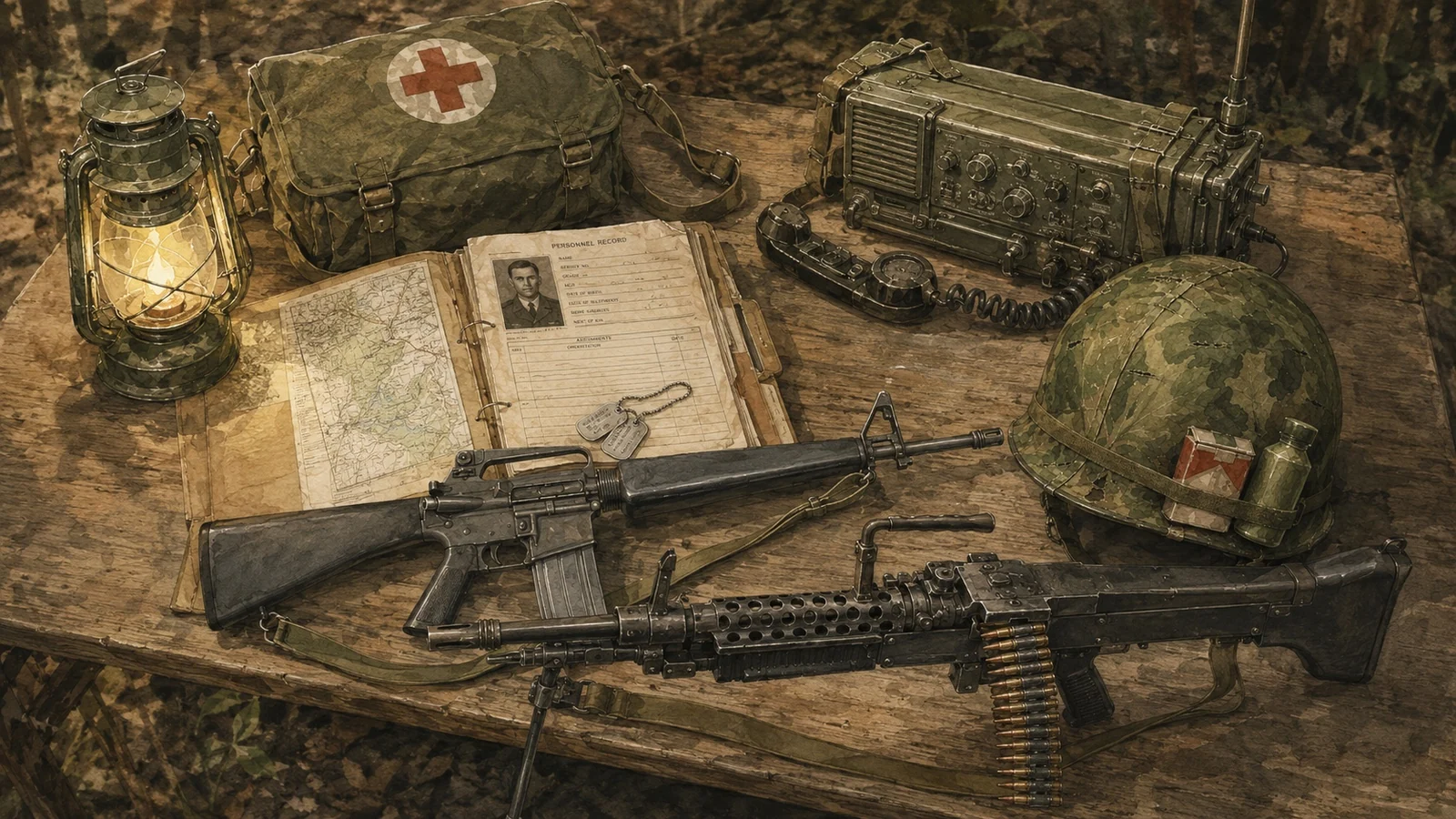
For the RTO, that means the radio, power, and necessary signal materials. For the Medic, it means medical supplies appropriate to the risk. For the Engineer, it may mean detection or demolition tools. For the Mechanic, a toolkit. For the Forward Observer, communication and reference gear. The Grenadier and Machine Gunner have specialized weapons and ammunition that define their jobs.
Do not automatically carry every role-related item. Ask what would make the role unable to answer a likely need. Those items take priority.
Then check the Service Record. The active bonuses should match the equipment you believe is on hand.
Step three: build the fighting load
The fighting load is what remains useful when the rucksack is dropped.
It normally includes weapon, immediate ammunition, essential protective gear, and the smallest role-critical tools needed during contact. It should not depend on opening the ruck in a moment when there is no time.
This is where players often discover a hidden packing error. The total carried weight may look acceptable because the ruck adds capacity, but the important item may be placed in the wrong layer. Dropping weight is only helpful if it does not also drop capability.
Imagine hearing “Drop rucks.” What remains? If the answer makes no sense for the archetype, adjust before leaving camp.
Step four: use the ruck for the longer problem
The rucksack holds what keeps the soldier functioning over time: extra water and food, spare clothing, rain or sleep equipment, additional supplies, and items that matter during the operation but not in the first seconds of danger.
The ruck provides meaningful additional capacity, so use it. The system is not trying to force every soldier into an unrealistically tiny load. It is trying to preserve the distinction between movement and fighting.
Sustainment items deserve respect. Dry socks can matter more to a long movement than an impressive object that never leaves the pack. A poncho has more than one use. Batteries and film are useless only until the device they support runs empty at the wrong moment.
The question is not whether the item sounds exciting. It is whether it supports the day you named in step one.
Step five: let the footlocker do its job
The footlocker is not a failure pile. It is where the character keeps objects that matter at camp, belong to another kind of movement, or should not be exposed to every risk.
Extra uniforms, gifts, personal possessions, reserve supplies, and special-purpose tools can wait there. A camera may stay at camp when the day does not suit photography. A full toolkit may be unnecessary for a duty where a smaller set is enough. Catalogue purchases and comforts can have value without becoming patrol equipment.
The footlocker also gives the player's collection a sense of place. P.A.T.H.: Vietnam does not need every owned object to orbit the soldier invisibly.
Step six: check the number, then check the person
Review total load against capacity. A small overage reduces Mobility and Stamina; greater excess makes the penalty worse, and severe overload slows movement substantially.
If the number is high, do not remove items at random. Work backward:
- Is a duplicate carried accidentally?
- Is a camp item in the field load?
- Is a specialized tool present for a task that is not happening?
- Can a supply be reduced without removing the capability?
- Is the ruck itself appropriate for the day?
Then check the character's condition. A technically legal load may still be a poor choice for someone exhausted, ill, wounded, or dealing with damaged feet. The body carrying the number matters.
Three sample approaches
A Grunt on a foot patrol may keep weapon, ammunition, grenades, protection, water, and immediate navigation or survival help in the fighting load. The ruck holds the longer sustainment layer. Personal camp comforts stay behind.
A Medic on the same movement gives medical capability a larger share of the load. That may mean fewer personal extras or a greater reliance on squad support. The fighting load should still preserve urgent care after the ruck is dropped.
A Mechanic on mounted road security may carry technical tools that would be unnecessary on a short perimeter duty. Because the vehicle is part of the mission, preventing a minor fault from becoming a stranded column justifies weight that would look excessive on another day.
These are approaches, not recipes. Weather, duration, condition, and player style still matter.
Update, do not obsess
The loadout changes as supplies are consumed, items wear, purchases arrive, and the player learns what this character uses. Review after a meaningful change, not after every button press.
A good packing routine should take a minute:
- Name the duty.
- Protect the role.
- Protect the fighting load.
- Sustain the longer movement.
- Put the rest at camp.
- Check weight and condition.
Then leave the desk and live with the decision.
That last part matters. A loadout becomes interesting only when the game stops being a packing screen and starts revealing what your choices meant.