
Stress, Morale, Trust: The Numbers You Feel
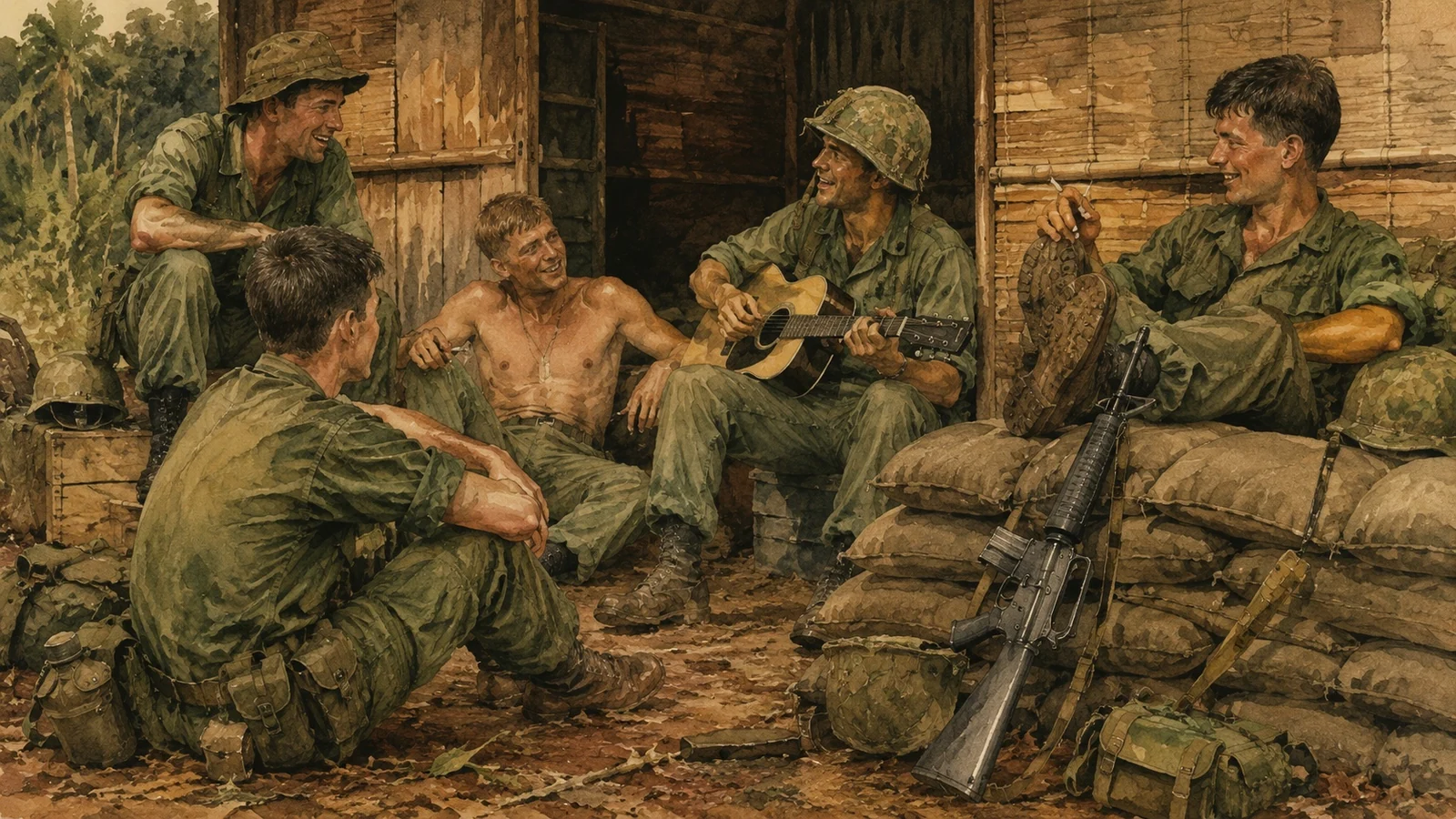
P.A.T.H.: Vietnam tracks stress, morale, and trust, but it does not want the player staring at three coloured bars all day.
The systems run beneath the fiction. Their effects appear in condition, choices, relationships, journal language, performance, and the way a place or person responds. The Service Record and Calendar can help the player read the state, but the numbers are not meant to replace attention.
The guiding principle is simple: feel the change before you calculate it.
Stress is not a failure meter
Stress rises under danger, uncertainty, exhaustion, loss, and sustained pressure. It can be reduced by rest, mail, comfort, social connection, and other human routines.
This does not mean a careful player can keep stress at zero. A historical war game should not imply that good self-management makes trauma impossible.
Instead, the system makes condition part of decision-making. A frayed character has less margin. He may perform worse, recover more slowly, or feel the consequences of another hard day more sharply.
The player response should not be shame. It should be recognition: this person needs something different now.
Rest may be the right Major action. A letter, conversation, radio programme, meal, wash, or small comfort may help around it. If the source of stress is larger than one quiet shift, the game should allow recovery to take time.
Morale is personal and shared
P.A.T.H.: Vietnam distinguishes the character's morale from the atmosphere of the squad and base. This matters because one person can have a good day inside a struggling unit, or feel low while everyone else appears steady.
Mail, progress, shared success, care, and ordinary pleasures can lift morale. Loss, shortage, poor conditions, and difficult events can wear it down.
The player cannot control all of this. That limit protects the squad from becoming a set of followers whose mood exists only to reward the main character.
You can contribute. Pulling a needed detail, spending time with someone, sharing a comfort, or helping the base function can matter. But other people retain their own lives and pressures.
Morale is strongest as a climate, not a currency.
Trust grows through patterns
Squad relationships begin with names and roles, then build through repeated contact.
Conversation helps, but trust is not created only by selecting friendly dialogue. Doing the job, keeping a promise, lending help, sharing risk, and responding consistently all contribute.
The Finance desk can make trust practical through a small loan. The journal can show when a conversation changed tone. Operations can test whether a bond holds under pressure.
P.A.T.H.: Vietnam also includes local trust beyond the squad. How people are treated during village and district interactions can affect whether information, warning, or cooperation becomes possible. This is not a simple “hearts and minds” score that resolves a complicated war. It is a quiet consequence layer: people remember behaviour.
Trust should never make another person fully predictable. It changes the relationship; it does not erase agency.
Read signals, not just labels
The Service Record uses plain-language condition words to summarize what the underlying systems are doing. The Calendar echoes some of that state. These labels are useful, especially when returning to a campaign after time away.
Do not wait for the worst label before responding.
Read the day:
- Is the character sleeping?
- Has he stopped writing?
- Are the same tensions appearing in the journal?
- Is he using every quiet shift for work?
- Has the squad's dialogue changed?
- Are ordinary comforts no longer helping?
None of these alone proves a crisis. Together, they create a picture.
This is why the Journal and Service Record belong beside each other. One shows pattern through story; the other summarizes condition.
The role can affect the pressure
Archetypes carry different forms of stress.
The Medic is needed when someone is hurt and may carry responsibility after the emergency. The RTO remains close to urgent messages and visible equipment. The Machine Gunner carries physical weight and tactical attention. The Point Man moves through the space where early notice matters to everyone. The Mechanic may understand exactly what will happen if a failing machine cannot be fixed.
The game does not need a separate anxiety statistic for every job. Role, equipment, events, and player imagination combine to create distinct pressure.
LifeP.A.T.H. adds another layer. Mail, family expectations, identity, and the post-war dream affect what the same event means to different people.
Do not optimize away the human story
Once players understand that letters and comforts can lower stress, a risk appears: every human action becomes maintenance.
Writing home should not feel like consuming a repair kit. Sitting with a squadmate should not become a guaranteed morale transaction. The system may recognize these actions, but the story has to remain larger than the effect.
Choose them because they suit the character. Let the mechanical benefit be one part of why human connection helps.
The same restraint applies to local trust. Fair behaviour should not be chosen only because it unlocks a patrol bonus. The consequence can support the moral choice without replacing it.
Staying human is not the same as staying unchanged
The goal of these systems is not to preserve the Day One character in perfect condition until DEROS.
The tour should change him. Stress, morale, and trust help describe how the change travels through the body, the group, and the player's choices. Recovery is possible. Damage can linger. A relationship can become a source of strength and a source of vulnerability at the same time.
You will never control every number. You can notice, respond, and decide what kind of person this soldier tries to remain.
That is the player-side meaning beneath the system.