
The RTO Carries the Voice
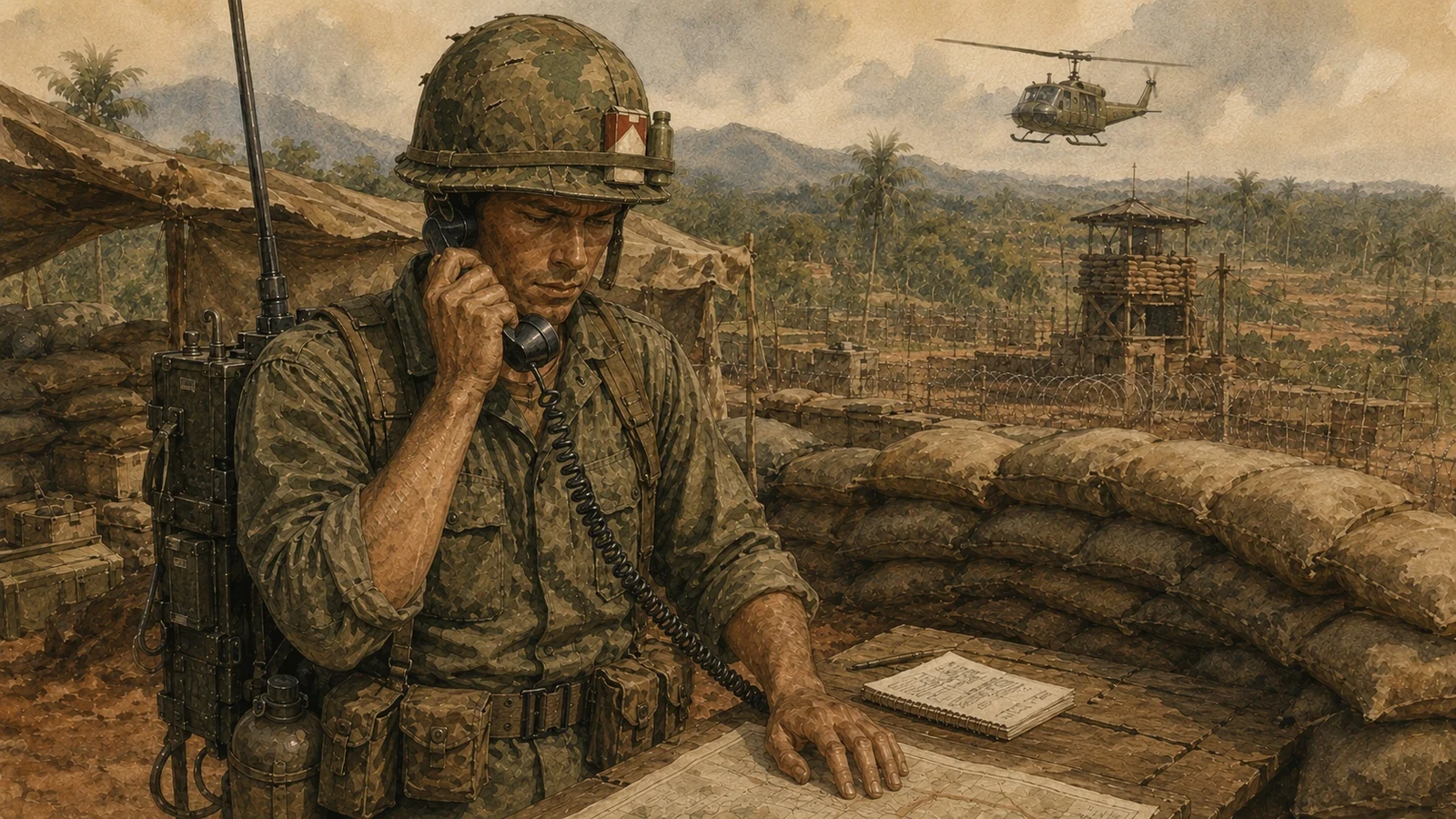
The Radio Telephone Operator carries a device, but his real load is connection.
The PRC-25 links the people on the ground to command, information, support, and help beyond what they can see. It can turn a confused report into action. It can also turn one wrong word, missed detail, or damaged connection into a problem that travels.
In P.A.T.H.: Vietnam, the RTO is for players who enjoy standing near the centre of decisions without needing to be the formal leader. You carry the voice of the unit. Other people may decide what to request; you help make the request real.
The radio changes the body
The first fact about the PRC-25 is physical: it weighs about eight pounds before the rest of the character's load is considered. Spare batteries, signal materials, weapon, ammunition, water, protective equipment, and ordinary field gear still need space.
That makes the RTO an immediate lesson in loadout design. The radio cannot help from the footlocker. Neither can the batteries. Carrying them, however, reduces the room available for everything else and pushes a character with moderate Strength closer to encumbrance penalties.
The rucksack can expand capacity, but it does not make the load imaginary. If you drop the ruck, you should know whether the communication equipment remains part of the fighting load. If the answer depends on how the kit was arranged, that arrangement belongs to play.
The RTO therefore encourages a useful habit: pack by function. What keeps the radio operating? What keeps the operator operating? What can remain at camp? What can be shared? The role rewards preparation long before the first call.
Signals or Forward Observer
The RTO can specialize in Signals or Forward Observer work.
Signals focuses on the integrity of communication: equipment, procedure, clarity, and the ability to keep a message moving. It suits a player interested in the radio as a system and in the RTO as the unit's communication backbone.
Forward Observer work turns attention outward toward location, terrain, and support. It brings the RTO closer to the difficult business of accurately describing what is happening and where.
Both specialties rely on Intelligence and attention. Both also depend on language. Under pressure, the valuable message is not the most dramatic one. It is the one another person can understand and act upon.
Close enough to hear the decisions
The RTO often stays near a leader because the leader needs the radio. This creates an unusual player perspective.
You may hear uncertainty before the rest of the squad does. You may receive information that has not yet become action. You may understand that support is delayed, a route has changed, or another unit is dealing with its own problem. The radio makes the world larger, but it also reveals how incomplete every view of that world can be.
This is one reason the RTO is not simply a “support class.” The role places the player beside authority without giving him complete control. You participate in the chain of consequence.
The position can also make the character conspicuous. An enemy does not need a complete organizational chart to understand that the person with the antenna matters. Connection is protection, but importance creates risk.
Communication outside the operation
P.A.T.H.: Vietnam contains another radio in the Field Desk: the set that brings in the atmosphere of AFVN and the larger world. The two radios serve different purposes, but they rhyme.
One carries the unit's immediate needs. The other carries music, announcements, news, and a reminder that life continues elsewhere. An RTO character may hear that second radio differently. For him, static is not only atmosphere. It is a problem, a habit, and perhaps a relief from the disciplined language of the working net.
Letters create a similar contrast. The RTO may spend the day carrying other people's messages and the evening struggling with his own. What can be said to someone at home? What must be left out? What happens when a message is delayed, misunderstood, or never sent?
These connections are not mechanical copies of one another. They form a theme around the role: distance can be crossed, but never perfectly.
Building the character
The RTO begins with a balanced set of communication, technical, observation, combat, and persuasion skills. There are several useful directions for growth.
Technical improvement supports the equipment. Recon helps the character understand what he must report. Persuasion can matter when information needs to move through people rather than circuits. Stamina and Mobility become tempting when the radio load starts collecting a physical cost.
Let the tour show you what this RTO lacks. If he never loses a message but struggles to keep up, the next lesson is not another communications trick. If he can carry the radio anywhere but cannot make himself understood, the human side of the role needs attention.
LifeP.A.T.H. can deepen this further. Perhaps the character grew up repairing electronics, talking over other people in a large family, or listening more than he spoke. Perhaps he chose the work because it sounded safer than the rifle squad and discovered that the radio keeps him beside every urgent decision.
Why choose the RTO?
Choose the RTO if you like information, responsibility, and a role that makes the larger war audible without making it controllable. Expect to care about equipment, exact language, and where you stand in relation to other people.
The RTO's best moments may not look like individual heroics. A message gets through. Support understands. A report is accurate. The unit is less alone than it was a moment before.
The radio is heavy because it is a real object. The voice is heavier because other lives may depend on what it carries.