The Grenadier and Machine Gunner: Two Kinds of Firepower
The Grenadier and the Machine Gunner both carry more firepower than an ordinary rifleman. That similarity can make them look like two versions of the same choice.
They are not.
The Grenadier carries a flexible answer to particular problems. The Machine Gunner carries sustained force that can shape an entire fight. One asks the player to judge range, ammunition, and effect round by round. The other asks the player to manage weight, visibility, position, and a weapon the squad may build its movement around.
Both roles are powerful. P.A.T.H.: Vietnam is interested in what that power costs to carry.
The Grenadier: the space between
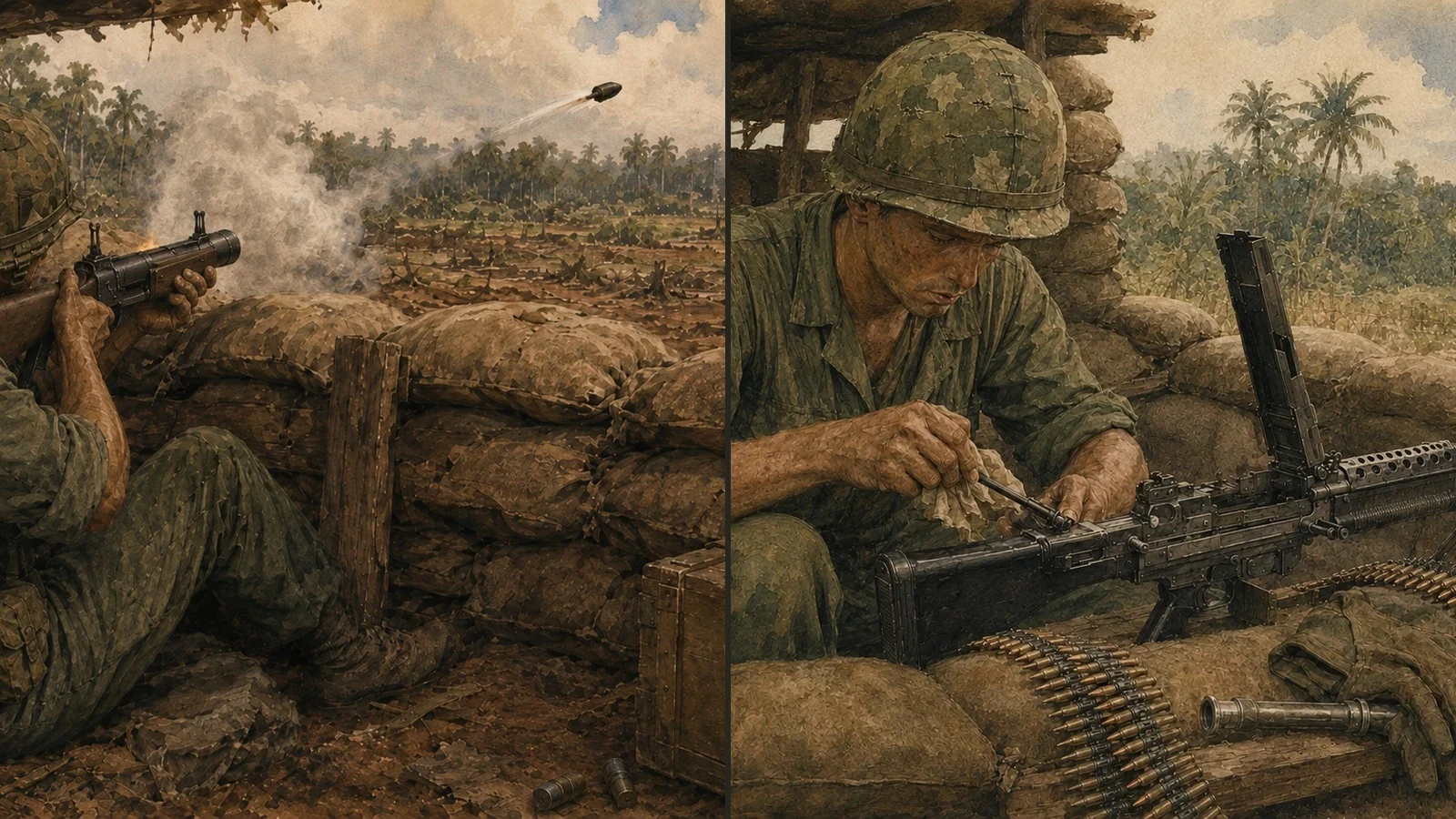
The M79 grenade launcher sits between rifle fire and larger support. It can reach places an ordinary rifle may not solve, and it can carry different kinds of ammunition. This gives the Grenadier options, but every option begins with judgment.
Range matters. Terrain matters. What lies near the target matters. The squad may call for the “Thumper” or “Blooper” when the ordinary answer is not enough, but the player still has to decide whether the launcher is the right answer.
The role begins with strong physical ability and a combination of ranged and heavy-weapons skill. Specialty choices emphasize the grenade launcher itself or Fire and Movement. The first leans into technical confidence with the weapon. The second keeps the Grenadier closely tied to how the squad advances and responds.
For a player, the attraction is versatility. A Grenadier is rarely carrying the maximum amount of one simple solution. He is carrying a small set of different possibilities. The loadout becomes a statement about the problems you expect.
That does not mean filling every pocket. Ammunition has weight. So does the launcher, sidearm, protective kit, water, and the ordinary equipment needed for a day outside the wire. Carrying a specialized tool does not release the character from the rest of soldiering.
The Machine Gunner: the centre of attention
The Machine Gunner's M60 is not subtle. It provides sustained fire and can change how the squad moves. Its presence can hold attention, cover movement, and make a position difficult to approach.
It also makes the gunner visible.
That is the role's central tension. The most powerful man in the immediate fight may also be the easiest person to identify as important. Strength and Stamina help manage the physical demand. Heavy-weapons skill helps operate the gun. None of that removes the need for position, teamwork, ammunition, and discipline.
The Machine Gunner's load is different from the Grenadier's. Belts of ammunition turn firepower into a logistics problem. The weapon is team-carried in spirit even when the character sheet needs a clear owner. Other people may carry part of what keeps it useful. That makes the gunner's relationship with the squad practical before it becomes emotional.
The specialty choices—Suppression Fire or Heavy Weapons—help define whether the player thinks first about controlling space or mastering the tool. In either case, a good gunner is not simply the character who fires the most.
Weight is part of the story
These two roles make P.A.T.H.: Vietnam's encumbrance system easy to understand. Power does not float beside the character. It rides on his body.
Every character has a load limit connected to Strength. A rucksack adds useful capacity, and web gear can help organize the fighting load. Once the total passes the safe limit, Mobility and Stamina suffer. A severely overloaded character moves more slowly. When contact begins, dropping the ruck can shed the long-movement burden while preserving essential fighting equipment.
For the Grenadier, the packing question is often variety versus quantity. For the Machine Gunner, it is ammunition versus endurance. Both need ordinary survival and upkeep items as well. A perfectly armed character with neglected feet, no rest, and a fouled weapon is not perfectly prepared.
Before leaving camp, ask three questions:
- What is this movement likely to require?
- What can stay in the footlocker without removing an important capability?
- If the ruck is dropped, what remains on the fighting load?
The Kit view makes these decisions visible. The consequences make them worth thinking about.
Fire discipline as character
A weapon can reveal personality.
One Grenadier may be cautious, saving a round until the situation is clear. Another may trust practiced instinct. One Machine Gunner may see his role as protecting movement, while another may define safety as overwhelming the threat quickly.
The game does not need a personality meter labelled “disciplined.” The player's repeated choices can create that identity. Ammunition spent, risks accepted, positions chosen, and the squadmates protected all become part of the tour's record.
The same is true away from combat. A character who carries the squad's loudest weapon may be the quietest person in the hooch. He may save most of his pay, keep careful photographs, or become the person others trust with an informal loan. Archetype is a responsibility, not a complete personality.
Which one should you choose?
Choose the Grenadier if you enjoy selecting the right tool for the moment. You should be comfortable with a role that is powerful because it is flexible, and with the fact that flexibility requires preparation.
Choose the Machine Gunner if you enjoy being a focal point of the squad's movement. You should be willing to think about weight constantly and to accept that your value can make you a target.
Neither role is a shortcut through the game. P.A.T.H.: Vietnam does not use firepower as a substitute for judgment. The launcher and the machine gun create more consequential decisions, not fewer.
That is what separates these two roles from a simple weapon selection. You are choosing how the squad will depend on you—and what kind of burden you are willing to carry when it does.